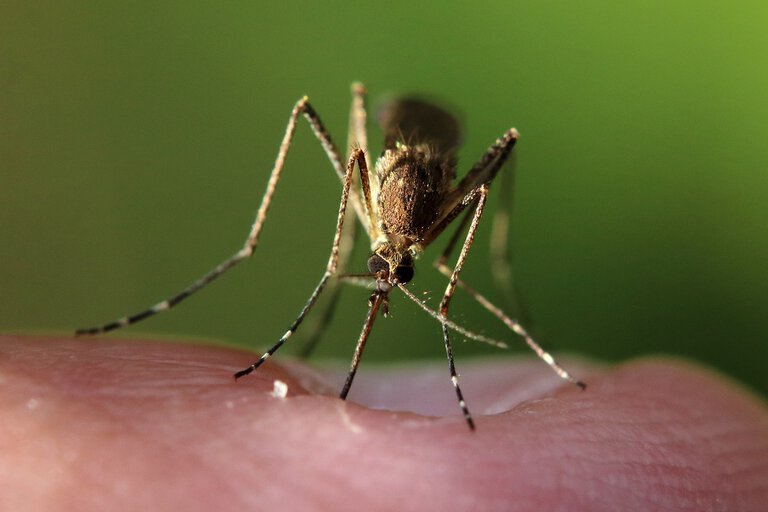
Natural Itch Relief Explained for Outdoor Families
The fastest natural relief for a bug bite or sting comes down to three moves: cool the skin immediately, apply a fragrance-free topical like colloidal oatmeal or aloe vera gel, and cover the area to stop scratching. The American Academy of Dermatology recommends a cold, damp cloth or ice pack applied for 5–10 minutes as the first action. These steps provide temporary relief, typically lasting for a short period per application, and working best when repeated as needed rather than as a one-time fix.
Quick field actions:
- Cool it first. Press a cold, damp cloth or ice pack to the bite for 5–10 minutes to interrupt the itch signal.
- Wash gently. Rinse with mild soap and water to remove venom residue and reduce infection risk.
- Apply a fragrance-free topical. Colloidal oatmeal cream, plain aloe vera gel, or a thick fragrance-free moisturizer all help restore the skin barrier.
- Cover the area. A bandage or light sleeve physically prevents scratching and protects healing skin.
- Watch for red flags. Spreading redness, facial swelling, or difficulty breathing means stop home care and call 911.
Table of Contents
- What should you do in the first 5–15 minutes after a bite?
- Which natural topicals actually work for itchy skin?
- How do you break the itch–scratch cycle outdoors?
- When should you stop home care and seek medical help?
- Why do cooling and botanicals actually reduce itch?
- Justbiteme balm: a portable option for the trail
- Key Takeaways
- Our take on natural remedies for outdoor families
- Useful sources and further reading
What should you do in the first 5–15 minutes after a bite?
Acting fast after a mosquito bite, bee sting, or chigger encounter makes a real difference in how much you’ll itch over the next hour. Here’s the order that matters.
- Remove the stinger if present. Scrape it out sideways with a fingernail or credit card edge. Pinching pulls more venom in.
- Cool the area. Apply a cold, damp cloth or a reusable cold pack for 5–10 minutes; cooling reduces local inflammation and temporarily distracts sensory nerves from the itch signal.
- Wash with mild soap and water. This removes surface irritants and lowers infection risk. No running water? A saline wipe or damp cloth works fine on the trail.
- Pat dry and apply a topical. Reach for aloe vera gel, colloidal oatmeal cream, or a fragrance-free moisturizer. Apply to damp skin soon after washing for the best barrier effect.
- Protect the site. A bandage or light sleeve keeps fingers off the bite and reduces mechanical damage.
| Action | Timing | Source |
|---|---|---|
| Cool compress | several minutes per application | AAD |
| Apply moisturizer | Within 3–5 min of washing | Cleveland Clinic |
| Repeat cooling as needed | Every 1–2 hours | AAD |
⚠️ Anaphylaxis warning: Difficulty breathing, throat tightening, rapid spreading hives, or facial swelling after a sting are signs of a severe allergic reaction. Call 911 immediately. Do not wait to see if symptoms improve.
Pro Tip: Pack a small zip-lock bag in your daypack. Fill it with water and a folded cloth at the trailhead — instant cold compress, no ice required.
Which natural topicals actually work for itchy skin?
Not every plant-based remedy earns its reputation. Here’s what dermatology sources actually support, how to use each one, and what to skip.
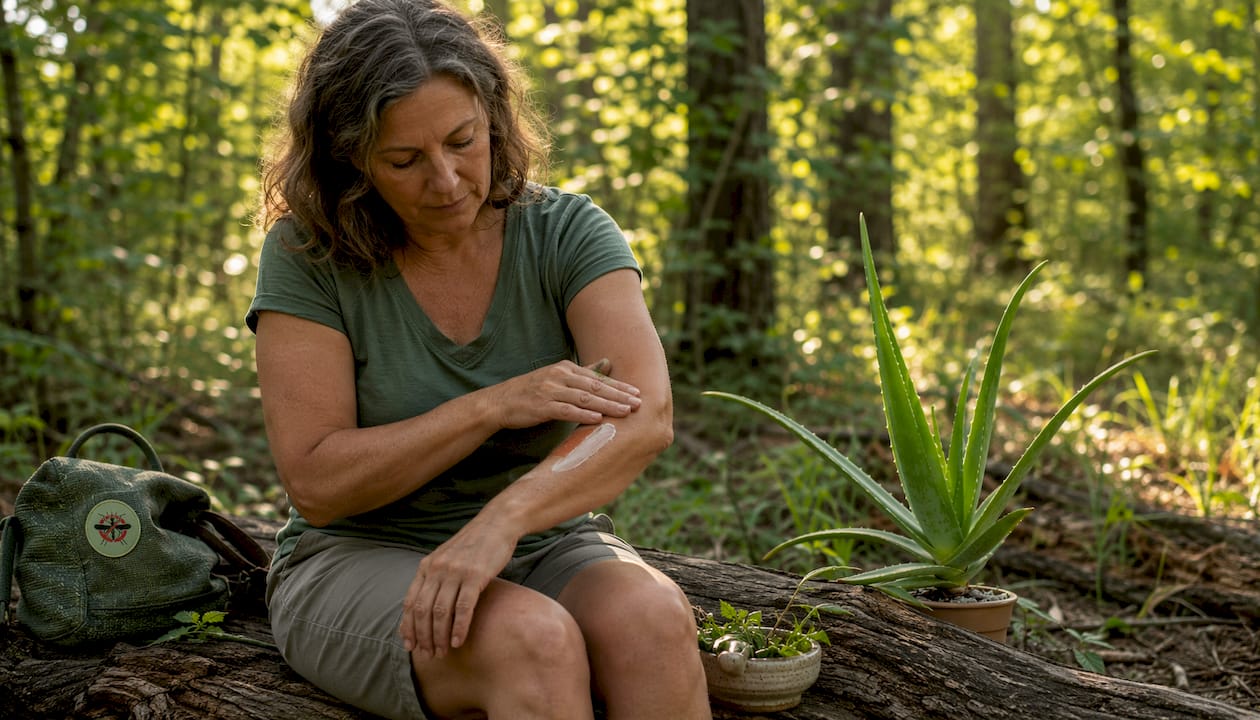
Options worth reaching for
Colloidal oatmeal forms a protective barrier on the skin’s surface, sealing in moisture and calming inflammation. Mayo Clinic guidance supports oatmeal baths as an effective natural method for irritated skin. For a bath, use lukewarm water, stir the oatmeal in well, and soak for 15–20 minutes. Stir occasionally so the oatmeal doesn’t settle and create a slip hazard. For spot treatment, a colloidal oatmeal cream applied directly to the bite works just as well without a full bath.

Aloe vera gel hydrates, reduces inflammation, and has mild antimicrobial properties that support the skin barrier. Pure aloe gel, refrigerated before use, delivers an extra cooling effect on top of its anti-inflammatory benefits. Check the label: some commercial aloe gels contain fragrance or alcohol, both of which can worsen irritation.
Fragrance-free moisturizers and occlusives like plain petroleum jelly or thick, unscented creams lock in moisture and protect the skin from further damage. Apply to slightly damp skin for maximum effect. For toddlers and infants, plain petroleum jelly is one of the safest choices because it has no added actives.
Menthol-containing products produce a cooling sensation that temporarily distracts nerves from the itch signal. At concentrations of 1–5%, menthol is most effective; higher concentrations can irritate sensitive skin. Use cautiously on children under two and avoid broken skin. Refrigerating a menthol cream before applying adds an extra layer of cooling relief.
Pro Tip: Before applying any new topical to a child, do a patch test: apply a small amount to the inner forearm and wait 24 hours. If no redness or swelling appears, it’s safe to use on the bite site. Fragrance-free is the single most important attribute to look for — fragrance is a leading trigger for contact dermatitis on already-irritated skin.
Natural remedies to avoid or use carefully
- Undiluted essential oils (tea tree, lavender, eucalyptus): always dilute in a carrier oil before skin contact. Undiluted oils can cause chemical burns or allergic contact dermatitis, especially on children.
- Raw apple cider vinegar: applying undiluted vinegar to broken or inflamed skin can worsen irritation and cause a chemical burn. If you use it at all, dilute 1:1 with water and keep it off broken skin.
- Heavily fragranced “natural” balms: the word natural on a label does not mean fragrance-free. Check the ingredient list for parfum, essential oil blends, or botanical extracts that commonly cause reactions.
For more on soothing ingredients for insect bites, including which botanicals have the strongest evidence, we’ve put together a deeper ingredient guide.
How do you break the itch–scratch cycle outdoors?
Scratching feels satisfying for about ten seconds, then the itch comes back stronger. That’s not coincidence. Scratching releases substance P from nerve cells, which activates mast cells to release more itch-inducing chemicals, perpetuating the cycle. Research confirms that scratching increases inflammation and immune-cell recruitment, worsening rashes and raising infection risk.
Breaking the cycle is mostly behavioral, and it’s something the whole family can practice on a trail or at a campsite.
Replacement behaviors and quick distractors:
- Cover the bite with a bandage or light sleeve immediately after applying a topical.
- Trim nails short before trips so accidental scratching causes less mechanical damage.
- For children at night, lightweight cotton gloves prevent unconscious scratching during sleep.
- Press or tap the skin around the bite instead of scratching — the pressure sensation competes with the itch signal without damaging skin.
- Distraction works surprisingly well for kids: hand them a snack, a trail activity, or a simple game within seconds of the bite to redirect attention before the scratch reflex kicks in.
- Reapply a cool compress or refrigerated cream when the urge to scratch peaks — the cold sensation gives nerves something else to process.
When should you stop home care and seek medical help?
Natural, temporary relief has real limits. Knowing when to step past home remedies keeps your family safe.
Red flags that need immediate care (ER or call 911):
- Difficulty breathing or swallowing
- Facial or throat swelling
- Rapid spreading hives across the body
- Dizziness, rapid heartbeat, or loss of consciousness after a sting
Signs of infection or worsening reaction (urgent care or PCP within 24 hours):
- Spreading redness beyond the bite site
- Warmth, increasing pain, or pus
- Fever developing after a bite
- Blisters or open sores forming
When home-care steps don’t relieve itching or skin changes worsen, medical evaluation is the right call. Natural relief typically lasts 30–60 minutes per application. If symptoms persist beyond 48–72 hours or worsen despite consistent care, schedule a visit with your doctor.
Child-specific cautions: Avoid topical anesthetics containing benzocaine on children under two without pediatric guidance. Oral antihistamines like diphenhydramine carry dosing restrictions by weight and age — always check with a pediatrician before using them on toddlers. For chemical-free options safe for little ones, our toddler-safe itch relief guide covers age-appropriate choices in detail.
A note on “natural” and safety: Natural does not equal risk-free. Undiluted essential oils, raw vinegar, and even aloe vera can cause allergic reactions in sensitive individuals. Always patch test a new product before applying it broadly, and choose fragrance-free formulations for children and anyone with sensitive skin.
This article is general information, not medical advice. Confirm current guidance with a qualified healthcare provider for your specific situation.
Why do cooling and botanicals actually reduce itch?
The science here is straightforward and worth knowing, because it explains why the order of steps matters.
Cooling works by temporarily interrupting the nerve signals that carry the itch sensation to the brain. Cold activates different sensory receptors that compete with itch-transmitting fibers, giving your nervous system something else to process. Menthol works through a similar mechanism, binding to cold-sensing receptors in the skin.
Emollients and occlusives restore the skin barrier by reducing water loss through damaged skin. A compromised barrier amplifies itch because nerve endings sit closer to the surface. Sealing the barrier with petroleum jelly or a thick cream reduces that exposure.
Botanical anti-inflammatories go a step further. Peer-reviewed research shows that certain plant compounds modulate histamine receptors and cytokine release, meaning they can help restore skin balance rather than just masking the sensation. Aloe vera, for example, suppresses prostaglandin synthesis and stabilizes mast cells, reducing the chemical signals that drive itch at the source.
| Mechanism | How it helps | Example |
|---|---|---|
| Nerve distraction | Interrupts itch signal transmission | Cold compress, menthol |
| Barrier restoration | Reduces transepidermal water loss | Petroleum jelly, colloidal oatmeal |
| Anti-inflammatory | Modulates cytokines and histamine | Aloe vera, colloidal oatmeal |
One important limitation: these approaches address symptoms, not underlying causes. A bite that keeps worsening after 48 hours may need medical treatment, not more cooling.
Justbiteme balm: a portable option for the trail
When you’re three miles into a hike and a determined little biter finds your ankle, reaching for a full tube of colloidal oatmeal cream isn’t realistic. That’s where a compact, clean-ingredient balm earns its place in your pack.
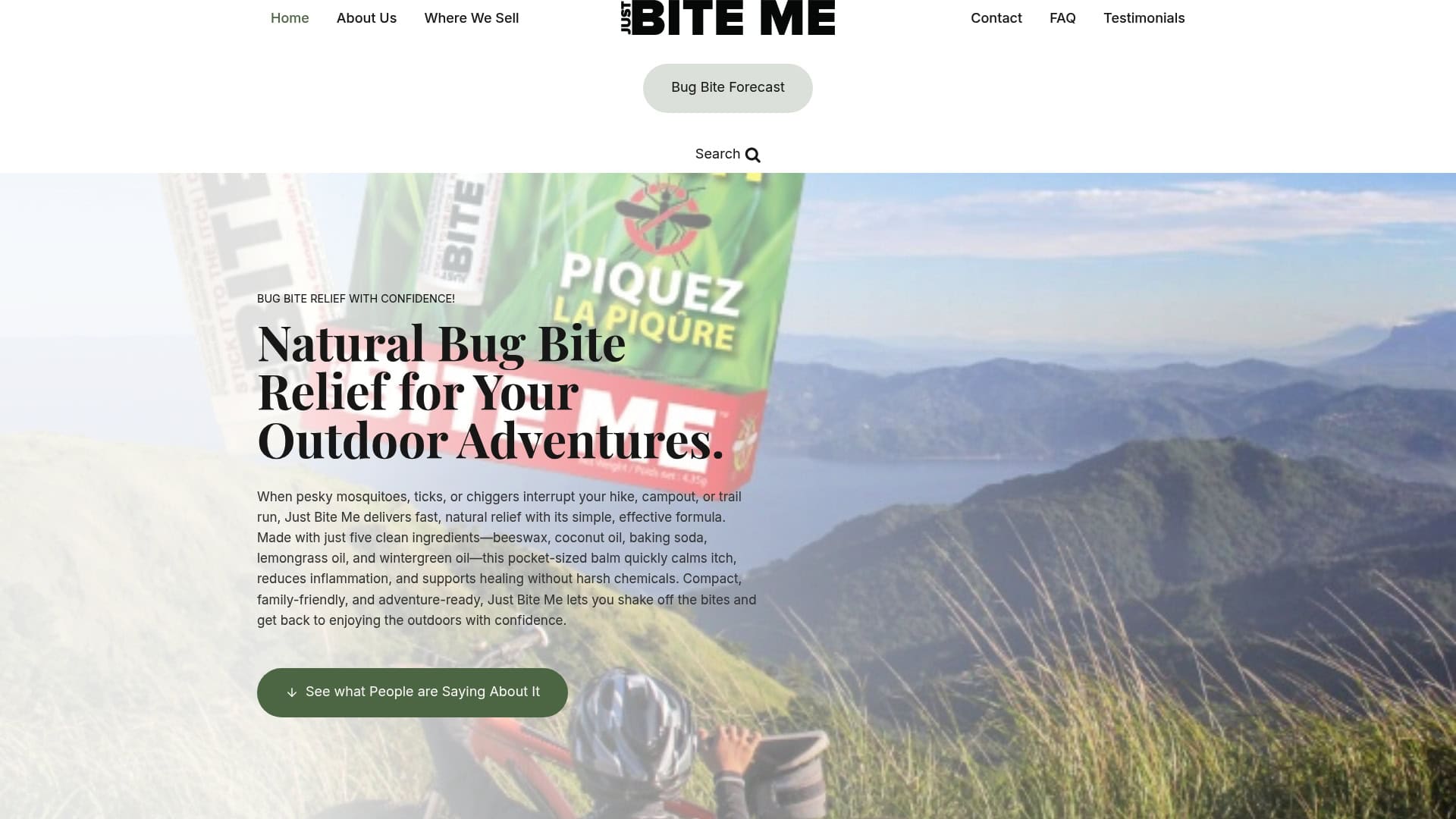
Justbiteme is a portable natural balm formulated for exactly this situation: temporary relief from mosquito bites, bee stings, chiggers, and poison ivy, built around just five clean ingredients including beeswax and coconut oil. The formula is designed to be family-friendly and free of the fragrance and harsh additives that can worsen irritation on sensitive skin. Use it after the cooling and washing steps covered above — apply a small amount directly to the bite site, let it absorb, and cover if needed.
For families who want to pack outdoor itch relief right, Justbiteme fits easily in a hip pack, first-aid kit, or kids’ backpack without adding bulk. It’s the kind of thing you toss in and forget about until you actually need it. Explore the full range of field-tested natural relief options and find the right fit for your next adventure at justbiteme.com.
Key Takeaways
The most effective natural approach to bug bite itch combines immediate cooling, a fragrance-free topical, and behavioral steps to break the scratch cycle.
| Point | Details |
|---|---|
| Cool first, always | Apply a cold compress for several minutes immediately after a bite to interrupt the itch signal. |
| Fragrance-free matters most | Choose fragrance-free topicals to avoid contact dermatitis on already-irritated skin. |
| Apply to damp skin | Put on moisturizer or colloidal oatmeal cream within 3–5 minutes of washing for the best barrier effect. |
| Know the red flags | Facial swelling, breathing difficulty, or spreading hives after a sting require a 911 call, not home care. |
| Justbiteme for the trail | Justbiteme’s five-ingredient balm offers portable, fragrance-free temporary relief for bites and stings outdoors. |
Our take on natural remedies for outdoor families
We’ll be straight with you: natural remedies work well for what they’re designed to do, which is temporary comfort while your body handles the real work. The mistake we see most often is treating “natural” as a synonym for “unlimited” — applying undiluted oils, skipping patch tests, or waiting too long when a reaction is clearly escalating. The families who get the most out of natural approaches are the ones who pair them with smart behavioral habits: covering the bite, keeping nails trimmed, and reaching for a cool compress before the scratch reflex wins.
For outdoor families, the practical priority is portability and simplicity. A compact balm, a cold pack, and a fragrance-free cream cover most situations you’ll encounter on a trail or at a campsite. Patch test anything new before the trip, not during it. And if you’re heading out with toddlers, keep the ingredient list short and the formulas gentle.
Useful sources and further reading
The guidance in this article draws from the following authoritative sources. We encourage you to read them directly, especially if you’re managing symptoms in a child or dealing with a reaction that isn’t improving.
- American Academy of Dermatology — Cool compress timing (5–10 minutes) and behavioral strategies for breaking the scratch cycle.
- Mayo Clinic — Colloidal oatmeal baths and when to seek medical evaluation for persistent or worsening symptoms.
- Cleveland Clinic — Fragrance-free product selection and the 3–5 minute moisturizer timing rule.
- Healthline — Menthol concentration guidance and cautions for sensitive skin types.
- Springer / Inflammopharmacology — Peer-reviewed review of botanical antipruritic mechanisms, including histamine modulation and cytokine pathways.
- Journal of Integrative Dermatology — OTC itch management review covering aloe vera, colloidal oatmeal, menthol, and emollients.
When to seek care: If symptoms worsen after 48–72 hours, if you see signs of infection (pus, spreading redness, fever), or if any signs of anaphylaxis appear, stop home treatment and contact a medical professional or emergency services immediately. For children, always confirm dosing and product safety with a pediatrician before use.
Recommended
- Natural Itch Relief vs Hydrocortisone – Just Bite Me – Stick it to the Itch
- How to Pack Outdoor Itch Relief Right – Just Bite Me – Stick it to the Itch
- Best Natural Bug Bite Itch Relief That Works – Just Bite Me – Stick it to the Itch
- Bug Bite Relief for Camping That Actually Helps – Just Bite Me – Stick it to the Itch