Why Natural Balms Are Safer for Long-Term Skin Use
Yes, natural anhydrous balms are genuinely safer for repeated, everyday use than most conventional synthetic ointments. Three things tell us this clearly: Justbiteme’s five-ingredient, beeswax-based formula, a comprehensive IJPS review linking prolonged synthetic ointment use to contact dermatitis and systemic toxicity, and the FDA’s position that “natural” carries no regulated safety standard. Here is the short version of why that matters for your next camping trip or backyard adventure:
- No preservatives needed. Anhydrous (water-free) balms skip the synthetic preservatives that water-based creams require to stay shelf-stable, cutting a major source of long-term skin irritation.
- Lipid carriers work with your skin. Beeswax and carrier oils align with your skin’s own sebum, creating a breathable barrier rather than a synthetic seal.
- Lower systemic absorption risk. Oil-and-wax bases tend to stay on the stratum corneum longer, reducing the chance that active compounds absorb into the bloodstream at meaningful levels.
Table of Contents
- How do anhydrous balms actually work on your skin?
- What are the documented long-term risks of synthetic topical ointments?
- Why “natural” does not automatically mean safe or hypoallergenic
- How to choose and use a natural balm safely for daily outdoor use
- When should you stop using a balm and see a clinician?
- Packing and day-use tips for families on the trail
- Key Takeaways
- Our take: balance is the whole point
- Justbiteme is built for exactly this kind of outdoor use
How do anhydrous balms actually work on your skin?
A natural balm does one elegant thing: it deposits a lipid-compatible layer directly on the stratum corneum, your skin’s outermost barrier, and stays there. Beeswax and carrier oils like coconut and olive oil share a fatty-acid profile close to human sebum, so they integrate with the skin’s surface rather than sitting on top of it like a plastic film. That compatibility is what makes the barrier breathable and hydrating at the same time.
Because there is no water in the formula, there is nothing for bacteria or mold to colonize. Water-based creams require synthetic preservatives such as parabens or phenoxyethanol to stay shelf-stable; anhydrous balms simply do not. For someone applying a product daily through a whole hiking season, that difference in preservative exposure adds up.
Formulation note: Lipid-based balms create a lasting barrier that reduces reapplication frequency compared with water-based creams, which evaporate quickly and require more frequent touch-ups.
Outdoors, that staying power matters. One application before a trail can hold through sweat and light rain in a way a lotion rarely does. The lipid carrier also improves delivery of any botanical actives in the formula, since those compounds tend to be lipophilic and travel more readily through an oil medium than a water one.
What are the documented long-term risks of synthetic topical ointments?
The IJPS comprehensive review found that conventional synthetic ointments are associated with skin irritation, contact dermatitis, systemic toxicity, and microbial resistance when used over extended periods. Those are not rare edge cases. They are the documented pattern of prolonged use, particularly with medicated formulas.

Topical antibiotics are a specific concern. Repeated use drives microbial resistance, and the skin itself can become sensitized to the antibiotic compound, triggering contact dermatitis that looks a lot like the original problem. Prolonged topical steroid use carries its own set of issues, including skin thinning and resistance over time. Non-medicated natural balms sidestep both mechanisms entirely.
Pro Tip: Rotate products and limit continuous use of any medicated topical to the shortest effective course. For anything that keeps coming back, a clinician visit beats another tube of the same cream.
Why “natural” does not automatically mean safe or hypoallergenic
Here is the honest caveat: “natural” is not a regulated term. The FDA has no single standard that defines what qualifies a product as natural, which means safety depends entirely on formulation quality, batch control, and ingredient testing. A label that says “natural” tells you almost nothing on its own.
Botanical ingredients can and do cause allergic contact dermatitis. A few worth knowing:
- Tea tree oil — a common sensitizer, especially at higher concentrations
- Lavender essential oil — widely used but a documented contact allergen for some people
- Citrus extracts and bergamot — photosensitizers that can cause burns or hyperpigmentation when skin is exposed to sun after application
- Fragrance blends — even plant-derived ones can contain dozens of individual compounds, each a potential trigger
Pro Tip: When reading a balm label, scan for “fragrance,” “parfum,” or any botanical extract you do not recognize. Short ingredient lists with named oils (coconut, beeswax, calendula) are easier to evaluate than long lists with generic terms. Check fragrance-free options if your skin runs sensitive.
How to choose and use a natural balm safely for daily outdoor use
A good balm for long-term use checks these boxes: anhydrous base, five or fewer recognizable ingredients, fragrance-free or very low fragrance, at least one known anti-inflammatory botanical, and transparent sourcing. That checklist is short on purpose. Complexity in a formula usually means more allergen exposure, not more benefit.
Patch-test procedure
- Apply a small amount of balm to the inside of your wrist or elbow crease.
- Leave it uncovered for 24 hours. Do not wash the area.
- Check at 24 hours and again at 48 hours for redness, itching, or swelling.
- If no reaction appears, the formula is likely safe for broader use on your skin type.
- If you do react, note which ingredients are in the formula and discuss with a dermatologist before trying another product.
Anhydrous balms vs. water-based creams
| Dimension | Anhydrous balm | Water-based cream |
|---|---|---|
| Safety profile for long-term use | Lower irritation risk; no preservative exposure | Higher preservative load with repeated use |
| Preservatives / shelf stability | None needed; stable across temperature swings | Requires parabens or similar to prevent microbial growth |
| Allergy / contact risk | Depends on botanicals used; generally lower | Preservatives and emulsifiers add sensitization risk |
| Mechanism of action | Lipid barrier + hydration; slow, sustained delivery | Occlusive or semi-occlusive; faster evaporation |
| Intended use | Daily soothing, barrier support, temporary relief | Targeted treatment, medicated delivery |

Storage rules
Keep your balm in a cool, dark place away from direct sunlight. Discard it if the smell changes, the texture separates, or it develops any discoloration. For homemade or small-batch balms, small-batch preparation reduces the risk of spoilage and potency loss.
Pro Tip: Write the date you opened the balm on the bottom of the tin with a permanent marker. Most anhydrous balms stay stable for 12 months or more, but knowing your open date removes the guesswork on a long trip.
When should you stop using a balm and see a clinician?
A balm is for temporary soothing of minor irritation. Stop using it and get medical attention if you notice any of these:
Those signs point to infection or a severe allergic reaction, neither of which a balm can treat. Spreading redness with warmth suggests cellulitis. Blistering after a sting can indicate a systemic allergic response. Fever alongside a skin reaction almost always warrants a same-day call to a clinician.
When you go, bring specifics: the exact time symptoms started, every product you applied and when, and your recent outdoor exposure history (region, plants, insects). That information cuts diagnosis time significantly.
Packing and day-use tips for families on the trail
For a day hike, one small tin or stick per adult and one for the kids’ pack is plenty. For multi-day trips, carry a backup in a separate bag so a lost pack does not leave anyone without relief. Label every opened container with the date.
Do:
- Apply with clean hands or a clean fingertip, never double-dip after touching a bite
- Reapply after swimming or heavy sweating
- Store the balm in a shaded pocket or bag, not in a car’s glove compartment where heat spikes
Don’t:
- Apply balm and sunscreen or insect repellent to the exact same spot at the same time; let one absorb first
- Share applicators between family members if anyone has an open skin break
- Use a balm on broken or blistered skin without clinician guidance
Family trail kit checklist
- Natural balm (one per person for multi-day trips)
- Antiseptic wipes
- Adhesive bandages in two sizes
- Small mirror (for checking hard-to-see spots)
- Written list of each family member’s known botanical allergies
Pro Tip: For portable outdoor relief, keep the balm in a small zip-lock bag to contain any melt in summer heat, and store it in the coolest part of your pack.
Key Takeaways
Anhydrous, oil-and-wax balms are safer for long-term daily use than most synthetic ointments because they avoid preservatives, align with skin’s natural lipid barrier, and carry lower systemic absorption risk.
| Point | Details |
|---|---|
| Anhydrous base = no preservatives | Water-free formulas skip parabens and similar compounds that accumulate with daily use. |
| Patch-test before full use | Apply to your inner wrist for 48 hours to catch reactions before a long trip. |
| “Natural” is unregulated | Safety depends on ingredient quality and batch control, not the label alone. |
| Red flags need a clinician | Spreading redness, fever, blistering, or worsening after 72 hours requires medical care, not more balm. |
| Justbiteme fits the checklist | Five clean ingredients, beeswax base, no synthetic preservatives, compact format for families outdoors. |
Our take: balance is the whole point
The case for natural, anhydrous balms is strong, but it is not absolute. We believe the smartest approach is to use a clean, well-formulated balm for daily soothing and barrier support, and to reach for clinician-recommended synthetics when a condition genuinely calls for them. Those two things are not in conflict.
What we push back on is the idea that “natural” is a free pass. It is not. Bergamot in a balm you apply before a sunny hike can cause a photosensitivity burn. Tea tree at high concentration can sensitize skin over time. The BBC’s analysis of natural vs. synthetic trade-offs makes a point worth sitting with: sometimes a biotech-derived ingredient offers better purity and a lower environmental footprint than a wild-harvested botanical. Choosing natural is not automatically choosing better. Choosing well-formulated is.
That is why a short ingredient list, transparent sourcing, and a patch-test habit matter more than any marketing claim on the label. When you combine those habits with a genuinely anhydrous, lipid-based formula, you get something worth trusting for the long haul.
Pro Tip: If a clinician recommends a medicated topical alongside your balm, apply the medicated product first, let it absorb fully, then apply the balm over it as a barrier layer. Never mix them in your palm or layer them simultaneously.
Justbiteme is built for exactly this kind of outdoor use
Justbiteme’s balm maps directly to the selection checklist in this article: anhydrous beeswax base, five clean organic ingredients including coconut oil and essential oils, zero synthetic preservatives, and a compact format that fits in any trail pack or kid’s backpack. It is designed for the mosquito bite at mile three, the chigger itch at the campsite, and the poison ivy brush on the way back to the car.
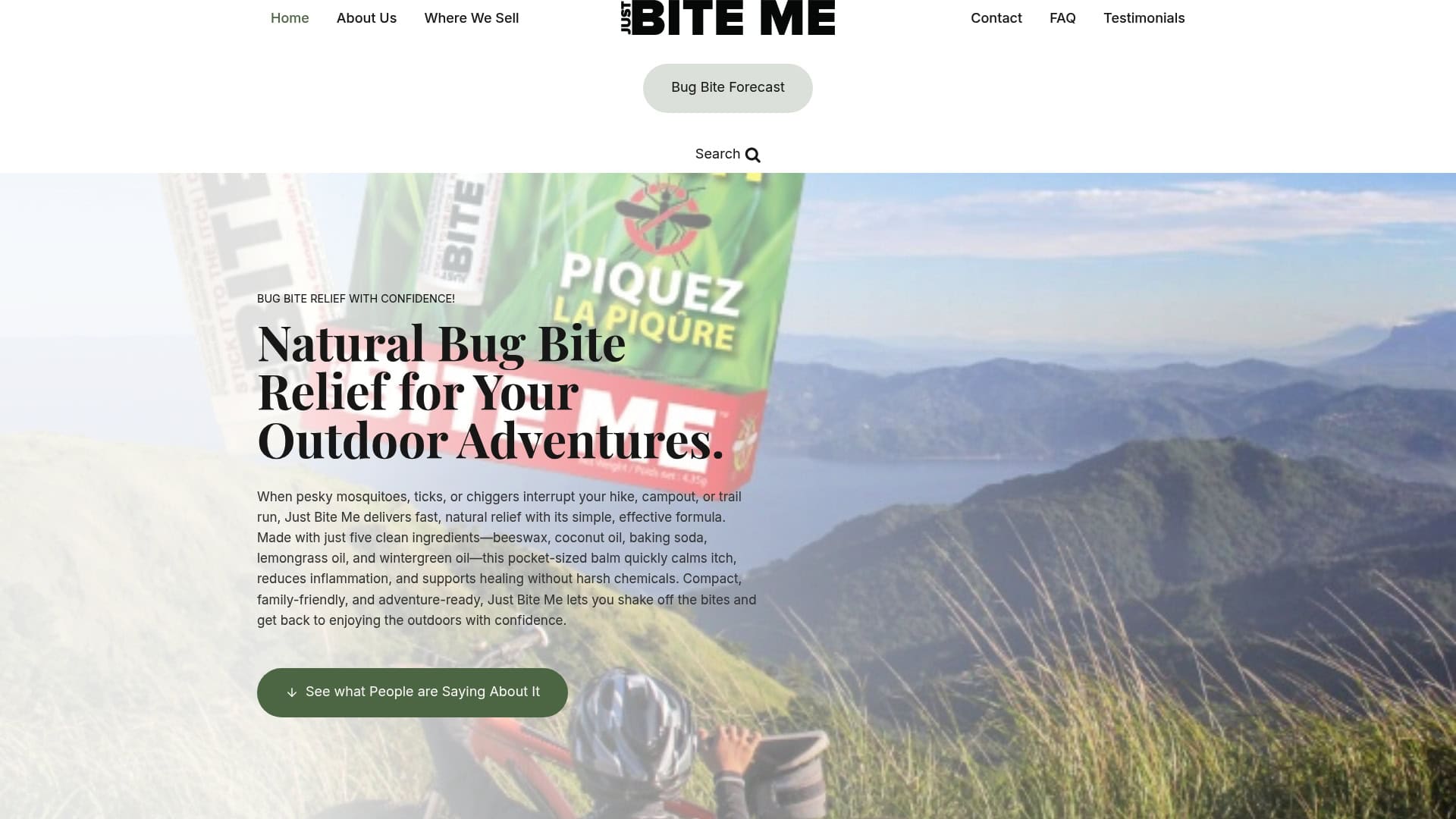
Every ingredient is chosen for a reason, and the short list means you can actually read and evaluate it before you apply. That transparency is the whole point. If you want to dig into what makes the formula work, the ingredient breakdown walks through each component and why it earns its place.
Ready to keep your family comfortable on every adventure? Grab your Justbiteme balm and pack one for every person on the trail.
Useful sources and further reading
- IJPS Comprehensive Review — “Natural Herbal Ointments as Safer Alternatives to Synthetic Ointments for the Management of Skin Disorders”: ijpsjournal.com
- Journal of Drugs in Dermatology — preservative science, regulatory guidance, and clinician perspective on natural vs. synthetic formulations: jddonline.com
- Dermology Hub — natural vs. chemical skincare and botanical allergen overview: dermologyhub.com
- PreventiveMedicineDaily — storage, spoilage risk, and small-batch guidance for natural remedies: preventivemedicinedaily.com
- BBC Future — synthetic vs. natural trade-offs for health and environment: bbc.com
- Justbiteme — product formulation details, beeswax science, and outdoor use guidance: justbiteme.com