Eco-Friendly Itch Relief Routine for Outdoor Families
Your three-step eco-friendly itch relief routine: Cool (cold press for a short, limited time) → Spot-treat (baking soda paste or diluted menthol) → Protect (barrier balm). Most people feel meaningful relief within minutes to an hour, and the whole kit fits in a 3×3×1 inch pouch. A 2025 National Library of Medicine review confirmed plant-based menthol works as an antipruritic by cooling and distracting nerve endings, and Cleveland Clinic dermatologist Dr. Shilpi Khetarpal explains that the cold-press step interrupts nerve signaling before the itch-scratch cycle can take hold. For the protect step, Justbiteme’s compact balm, made from beeswax, coconut oil, baking soda, lemongrass oil, and wintergreen oil, is the single-item solution we recommend for families heading outdoors.
Table of Contents
- What to do in the first 30–120 seconds when the itch hits
- Eco-friendly spot treatments you can make or pack
- Poison ivy and poison oak: first actions that limit spread
- What to pack for your family’s outdoor itch kit
- When should you see a doctor instead of treating at home?
- Why these eco-friendly methods actually work
- Key Takeaways
- Why we built this routine around what actually works outdoors
- Justbiteme balm: the compact protect step for your kit
- Useful sources and further reading
What to do in the first 30–120 seconds when the itch hits
Speed matters. The faster you break the itch-scratch cycle, the less inflammation you’ll deal with later.
- Rinse (0–30 sec): Flush the bite or rash with cool water to remove surface irritants and slow the histamine response.
- Cold press (30 sec–10 min): Wrap ice or a cold pack in a cloth and hold it against the site. Dr. Shilpi Khetarpal at the Cleveland Clinic notes this interrupts nerve signaling and prevents the inflammation that scratching causes. The AAD recommends limiting each application to 5–10 minutes.
- Cover (immediately after): Loosely cover the area with a clean cloth or bandage to reduce the urge to scratch.
- Distract (ongoing): Apply your spot treatment right after the cold press while skin is still cool and receptive.
Safety note: Never place unwrapped ice directly on skin. Always use a cloth barrier to prevent frostbite on sensitive or children’s skin.
Eco-friendly spot treatments you can make or pack
Baking soda paste and diluted peppermint are the two most field-proven, low-waste spot treatments you can carry. Both are safe for most family members when used correctly, but always patch-test first and keep essential oils away from broken skin.
DIY recipes with proportions
- Baking soda paste: Mix baking soda with just enough water to form a thick paste. Apply to the bite and leave for a brief period before rinsing. Mayo Clinic lists this as a reliable spot treatment for insect bites. Not for broken or bleeding skin.
- Diluted peppermint oil: 1–2 drops peppermint essential oil in 1 teaspoon of coconut oil. The NLM 2025 review confirms menthol from peppermint distracts itch-signaling nerves. Never apply undiluted to inflamed or broken skin.
- Colloidal oatmeal sachet: Add some finely ground colloidal oatmeal to a lukewarm bath and soak for several minutes for widespread itch. For field use, pre-pack a small zip-lock sachet.
- Aloe gel: Apply pure aloe vera gel directly to the bite for immediate cooling. Works well as a follow-up after the cold press.
Pro Tip: Pre-mix your diluted peppermint oil at home in a small dropper bottle so you’re not measuring in the field. Label it clearly and store it away from direct sunlight.
| Treatment | How it works | Pack format | Family safety |
|---|---|---|---|
| Baking soda paste | Balances skin pH, mild anti-inflammatory | Small zip-lock with dry powder | Safe for kids 2+; avoid broken skin |
| Diluted peppermint oil | Menthol cools and distracts nerve endings | 5 mL dropper bottle | Dilute to 1–2% in carrier oil; avoid under age 2 |
| Colloidal oatmeal sachet | Forms protective barrier, seals moisture | Pre-measured zip-lock sachet | Gentle for all ages |
| Aloe gel | Cools and calms inflammation | Small travel tube | Safe for all ages; use pure gel |

Justbiteme’s balm combines baking soda, coconut oil (carrier), beeswax (barrier), lemongrass oil, and wintergreen oil (menthol-adjacent cooling) in one fingertip-sized stick. It covers the spot-treat and protect steps without multiple containers, which is exactly what you want when you’re three miles into a trail with a toddler on your back. Learn more about how these soothing ingredients work together.
Poison ivy and poison oak: first actions that limit spread
The key with urushiol (the oil in poison ivy and oak) is speed. Washing it off within minutes dramatically reduces how much absorbs into skin.
- Remove clothing that touched the plant and bag it separately.
- Wash skin with gentle soap and cool water for at least 30 seconds, scrubbing under fingernails where urushiol hides.
- Cold press the affected area for 5–10 minutes using a cloth-wrapped pack.
- Apply barrier balm or baking soda paste to soothe itch and protect the area from further irritation.
- Avoid scratching. Urushiol does not spread through blister fluid, but scratching can introduce bacteria and worsen inflammation.
What to avoid: Undiluted vinegar or acidic home remedies on open blisters can increase irritation rather than calm it. Dermatology sources caution that acidic or undiluted remedies may delay healing on inflamed skin.
For toddlers and young children, use chemical-free itch relief options and always patch-test any new product on a small area first. Call your pediatrician if a child under 2 develops a spreading rash, facial swelling, or shows signs of distress after plant contact.
What to pack for your family’s outdoor itch kit
Five to seven items cover every step of the routine and fit in a small pouch. Here’s the checklist:
- Justbiteme balm (covers spot-treat + protect in one compact stick)
- Small zip-lock with pre-measured baking soda (about 2 teaspoons)
- Instant cold pack or reusable gel pack
- Individually wrapped alcohol-free wipes (for rinsing when water isn’t available)
- Small dropper bottle of diluted peppermint oil in coconut oil
- Two adhesive bandages (to cover treated bites and reduce scratching)
- Optional: pre-measured colloidal oatmeal sachet for bath use at camp
Pro Tip: Pack everything into a 3×3×1 inch zippered pouch and clip it to the outside of your day pack. When someone gets bitten, you won’t be digging through the main compartment.
| Item | Purpose | Approximate cost |
|---|---|---|
| Justbiteme balm | Spot-treat + barrier protection | — |
| Baking soda sachet | DIY paste for bite sites | Under $1 |
| Instant cold pack | Cold press in the field | $1–$3 each |
| Alcohol-free wipes | Rinse when no water available | Under $2 (pack) |
| Diluted peppermint oil | Cooling menthol distraction | Under $5 |
Total kit cost typically runs under $25 and weighs just a few ounces. For a deeper look at how to pack outdoor itch relief efficiently, we’ve got you covered.
When should you see a doctor instead of treating at home?
Home treatment works well for minor bites and localized rashes. Seek care when you see any of these signs:
- Spreading redness with fever or chills
- Growing warmth, pus, or red streaks around the bite (signs of infection)
- Swelling of the face, lips, or eyes
- Difficulty breathing or swallowing (call 911 immediately)
- A rash that covers a large area of the body and worsens after 72 hours
Timeline guidance:
- Wait and monitor (0–24 hours): Minor swelling, redness, and itch from a single bite are normal. Use the routine.
- Call your doctor (24–72 hours): If swelling grows, the rash spreads beyond the original site, or you develop a fever.
- Go to urgent care immediately: Any sign of systemic reaction, breathing difficulty, or facial swelling.
For infants under 12 months, call your pediatrician for any new rash or if you suspect the child ingested plant material or was stung near the face.
Why these eco-friendly methods actually work
Cooling, menthol, baking soda, and occlusive balms each interrupt the itch cycle through different mechanisms. Together, they cover the full routine without synthetic chemicals.

Cooling works because cold temperatures slow nerve conduction. Dr. Shilpi Khetarpal explains it plainly:
Menthol (peppermint) activates TRPM8 cold receptors in the skin, producing a cooling sensation that competes with itch signals. The 2025 NLM review identifies plant-based menthol as an effective antipruritic via this distraction mechanism, which is why botanical antipruritics are gaining traction as conventional treatments sometimes carry side effects.
Baking soda helps balance skin pH and has mild anti-inflammatory properties. Medical News Today notes you can add ¼ cup to a warm bath or apply it as a paste for spot relief.
Barrier balms (beeswax-based) seal the skin surface, reduce transepidermal water loss, and physically block scratching friction. Applying a fragrance-free moisturizer or occlusive balm within 3 minutes of bathing locks in hydration and reduces itch. Always dilute essential oils in a carrier oil before applying to skin, and patch-test any new blend on unaffected skin for 24 hours before full use. For families with sensitive skin, a simple skincare routine that prioritizes gentle, fragrance-free products makes a real difference.
Key Takeaways
A simple, portable eco-friendly itch relief routine, cool then spot-treat then protect, covers insect bites and poison ivy for the whole family with five to seven items that fit in a small pouch.
| Point | Details |
|---|---|
| Three-step routine | Cool (cold press 5–10 min) → Spot-treat (baking soda paste or diluted peppermint) → Protect (barrier balm). |
| Baking soda paste | Mix baking soda with just enough water to form a thick paste; apply for a brief period before rinsing; avoid broken skin. |
| Dilute essential oils | Always mix peppermint oil in a carrier oil (1–2 drops per teaspoon); never apply undiluted to inflamed skin. |
| Know when to seek care | Go to urgent care immediately for facial swelling, breathing difficulty, or spreading rash with fever. |
| Justbiteme balm | Covers spot-treat and protect steps in one compact stick; five clean ingredients, family safe, and trail-ready. |
Why we built this routine around what actually works outdoors
There’s a version of “natural itch relief” that looks great on a blog and falls apart the moment you’re on a trail with a crying five-year-old who just sat in a patch of poison oak. We’ve seen it. The advice is usually fine in theory but impractical in the field: too many bottles, too many steps, ingredients that need refrigeration, or recipes that require a kitchen.
What outdoor families actually need is a routine short enough to remember under stress, ingredients gentle enough for kids, and a kit small enough to carry without thinking about it. That’s the standard we held this routine to. The cool-then-spot-treat-then-protect sequence works because each step addresses a different part of the itch response: nerve signaling, skin chemistry, and physical barrier. You don’t need all fifteen home remedies on that list. You need three steps and five items.
The science backs the simplicity. Cooling interrupts nerve signaling before the scratch reflex kicks in. Baking soda and diluted menthol address the local chemistry. A beeswax barrier keeps the treated area protected and reduces friction from clothing or repeated contact. That’s the whole routine, and it fits in your hip pocket.
Justbiteme balm: the compact protect step for your kit
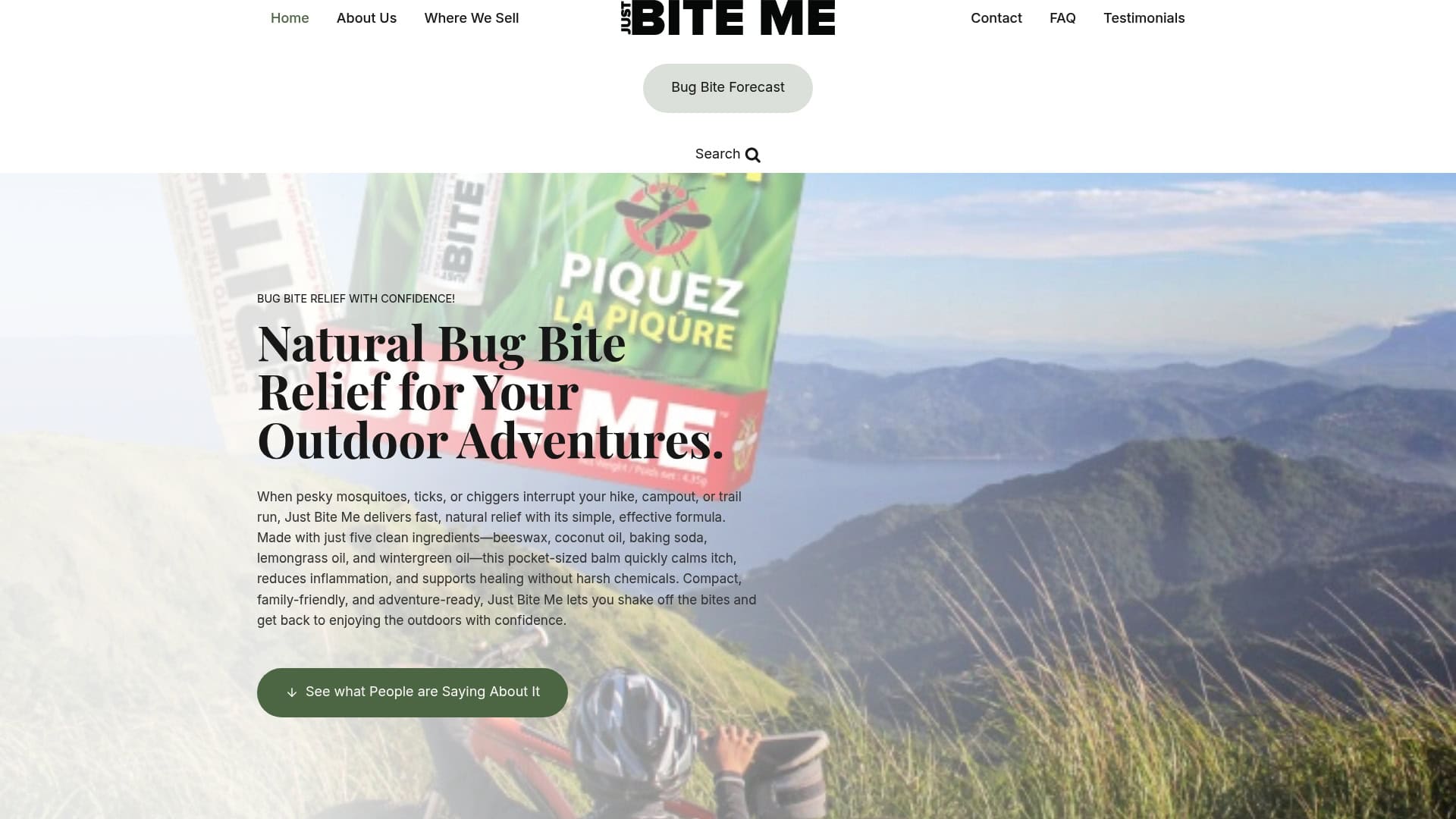
When you’ve finished the cool and spot-treat steps, you need something that seals the work in and keeps the itch from coming back while you keep moving. Justbiteme’s balm does exactly that. Its five ingredients, beeswax, coconut oil, baking soda, lemongrass oil, and wintergreen oil, map directly to the routine: beeswax forms the protective barrier, coconut oil carries and moisturizes, baking soda adds mild anti-inflammatory action, and lemongrass plus wintergreen provide gentle botanical cooling.
Apply a thin layer to the treated bite or rash after your cold press and spot treatment. For toddlers, do a patch test on the inner arm first and consult your pediatrician before use on children under 2. One stick covers the whole family for a weekend trip and weighs almost nothing in your pack.
Justbiteme provides temporary relief for minor skin irritation and itching. It is not a substitute for medical care when red-flag symptoms are present. For serious reactions, seek professional care immediately.
Ready to simplify your outdoor kit? Find Justbiteme at outdoor retailers, pharmacies, and local shops near you, or check out our camping relief guide to see how it fits your next adventure.
Useful sources and further reading
- PMC: Soothing the Itch — Medicinal Plants in Alleviating Pruritus (2025) — NLM review on plant-based menthol and botanical antipruritics
- Mayo Clinic: Itchy Skin Diagnosis & Treatment — baking soda paste and home remedy guidance
- Cleveland Clinic: Home Remedies for Itchy Skin — Dr. Khetarpal on cold press and the 3-minute moisturizing rule
- American Academy of Dermatology: Home Remedies for Itchy Eczema — safe cold-compress duration and wrapping guidance
- Medical News Today: 8 Natural Remedies for Itchy Skin — colloidal oatmeal, baking soda baths, and essential oil dilution safety
For young children, always consult your pediatrician before trying new treatments. Patch-test any new product on a small area of unaffected skin for 24 hours before full application.