All-Natural Sting Remedy: What It Is and How It Works
An all-natural sting remedy is a ready-made, plant-based balm that provides temporary topical relief from itching, mild swelling, and skin irritation after insect bites or stings. It manages symptoms — it does not neutralize venom. Before reaching for any balm, scan for signs of a severe allergic reaction:
- Difficulty breathing or throat tightening
- Face or tongue swelling
- Dizziness, rapid heartbeat, or fainting
- Hives spreading beyond the sting site
If any of these appear, call 911 immediately. People with known severe allergies should use their prescribed epinephrine auto-injector right away, then seek emergency care. For mild, local reactions, a natural balm is a practical first step.
Table of Contents
- What does an all-natural sting balm actually contain?
- How do natural topical remedies actually relieve symptoms?
- How to apply a natural sting balm safely, step by step
- When should you get emergency care or see a clinician?
- How do you pick the right all-natural sting balm for outdoor use?
- Justbiteme’s Just Bite Me balm: a ready-made option for the trail
- Quick first-aid checklist for a sting in the field
- Key Takeaways
- Why we believe in honest, portable relief
- The Just Bite Me balm is built for your next adventure
- Useful sources and further reading
What does an all-natural sting balm actually contain?
Most ready-made natural balms draw from a short list of well-known plant-based ingredients. Each plays a specific role, and the evidence behind them varies.
- Aloe vera — cools and soothes irritated skin; well-supported for surface-level itch relief
- Witch hazel — natural astringent that may reduce surface swelling; limited clinical research for sting use specifically
- Honey — antimicrobial and wound-supportive; medical-grade honey (such as Manuka) shows stronger evidence than standard household varieties
- Plantain leaf — traditional herbal remedy used topically for drawing out irritants; anecdotal support, limited formal study
- Beeswax — forms a protective barrier over the skin; helps lock in moisture and shields the area from further irritation
- Coconut oil — carrier and mild moisturizer; supports skin barrier function
- Essential oils (lavender, tea tree) — mild antimicrobial and calming properties; soothing ingredients for temporary topical use
Natural topical options like aloe vera, witch hazel, and honey are best used as supportive care for mild symptoms — the evidence that any of them neutralize insect venom is limited.
| Ingredient | Primary Action | Evidence Level |
|---|---|---|
| Aloe vera | Cooling, skin soothing | Well-supported for surface relief |
| Witch hazel | Astringent, mild antiseptic | Limited for stings specifically |
| Honey | Antimicrobial, wound support | Strong for medical-grade; mixed for household |
| Plantain leaf | Drawing, anti-itch (traditional) | Mostly anecdotal |
| Beeswax | Protective skin barrier | Well-supported as barrier agent |
| Coconut oil | Moisturizing carrier | Well-supported for skin barrier |
| Lavender / tea tree oil | Antimicrobial, calming | Moderate; dilution required |

How do natural topical remedies actually relieve symptoms?
Here’s the honest picture: these balms soothe and protect skin, help break the itch-scratch cycle, and may reduce surface irritation. They do not pull venom out of tissue or reverse an allergic response.
The mechanism is mostly physical. A beeswax-and-oil base creates a cooling, occlusive layer over the sting site. That barrier reduces air contact (which worsens itch), discourages scratching, and keeps the skin from drying out. Some ingredients like lavender or tea tree oil add mild antimicrobial action, which matters because stopping scratching is the single most important step to prevent secondary infection.
The NHS advises against household “neutralizers” like baking soda pastes or toothpaste. These don’t reliably neutralize venom and can irritate skin, potentially delaying proper care. Stick to clean, tested ingredients.
For best results, Cleveland Clinic guidance pairs physical measures (cold compress) with pharmacological support like oral antihistamines or hydrocortisone cream. A natural balm fits well alongside a cold compress — it is not a replacement for antihistamines when symptoms are significant.
Pro Tip: Apply your balm immediately after cleaning the sting site. The sooner you form that protective barrier, the less likely you are to scratch — and scratching is where most secondary infections begin.

How to apply a natural sting balm safely, step by step
Numbered steps for safe application
- Move to safety. Leave the area if stinging insects are still present.
- Remove the stinger (bee stings only). Scrape it out with a blunt edge like a credit card — never use tweezers, which can squeeze more venom into the skin.
- Wash the area with soap and water to lower infection risk.
- Apply the balm in a thin, even layer over the sting site.
- Use a cold compress wrapped in a thin cloth for 10 minutes on, 10 minutes off.
- Monitor for 30–60 minutes for any signs of worsening reaction.
What to avoid
- Toothpaste — irritates skin and has no proven effect on venom
- Baking soda pastes — NHS-flagged as unreliable and potentially irritating
- Undiluted essential oils — always use balms where oils are pre-diluted in a carrier base
- Honey applied outdoors in open areas — the scent can attract more insects
For children, do a patch test on a small area of skin before full application. Avoid tea tree oil on infants under 6 months, and always follow the age guidance on the product label. A compact, resealable balm format is ideal for family packs and trail kits.
When should you get emergency care or see a clinician?
Emergency warning signs — call 911 now
- Difficulty breathing or wheezing
- Swelling of the throat, tongue, or face
- Dizziness, confusion, or loss of consciousness
- Rapid spread of hives or swelling beyond the sting site
- Rapid or weak pulse
If you carry a prescribed epinephrine auto-injector, use it immediately at the first sign of anaphylaxis — do not wait to see if symptoms improve on their own. Then call 911. MedlinePlus is clear: epinephrine is the first-line treatment, not an antihistamine.
When to see a clinician (not an emergency, but don’t wait)
- Increasing redness, warmth, or pus around the sting site after 24–48 hours
- Swelling that spreads significantly or does not improve
- Worsening pain or infection signs over several days
- Fever developing after a sting
A natural balm handles mild, local reactions well. It is not the right tool for infections or systemic responses.
How do you pick the right all-natural sting balm for outdoor use?
Shopping for a ready-made natural balm doesn’t need to be complicated. Run through this checklist before you buy:
- Ingredient list clarity — every ingredient named, no vague “proprietary blend” language
- Soothing base present — look for beeswax and/or coconut oil as primary carriers
- No common irritants — avoid artificial fragrances, parabens, or alcohol-heavy formulas
- Appropriate scent profile — unscented or mildly scented; strong floral scents can attract insects outdoors
- Portability — compact, resealable packaging that fits a pocket or first-aid kit
- Clear age guidance — the label should specify child-safe use or age restrictions
- Transparent sourcing — organic certifications or third-party testing claims backed by specifics, not just marketing language
Pro Tip: Avoid any product that claims to “neutralize venom” — no topical balm does that. A product that honestly states “temporary symptom relief” and lists precautions is the one you can actually trust.
For a broader look at natural itch-relief options before you commit to a product, compare a few formulas side by side against this checklist.
Justbiteme’s Just Bite Me balm: a ready-made option for the trail
Justbiteme built the Just Bite Me balm specifically for outdoor use — hikers, campers, and families who want something clean, portable, and honest about what it does.
- Five clean ingredients: beeswax, coconut oil, and select essential oils form the core formula
- Beeswax barrier protects irritated skin and discourages scratching
- Coconut oil base keeps the formula smooth and skin-friendly in varying temperatures
- Essential oils provide mild, calming topical support without synthetic additives
- Compact format fits easily in a trail pack, day bag, or family first-aid kit
The balm is designed for temporary relief from mosquito bites, bee stings, chiggers, and poison ivy irritation. It maps directly to the buying checklist above: transparent ingredients, a soothing carrier base, and a portable format. Follow the label for age guidance, and use it as part of a full first-aid response — not as a standalone treatment for anything beyond mild, local reactions.
Pro Tip: Pack the Just Bite Me balm alongside a cold compress and a single-dose antihistamine. That trio covers the three main pillars of mild sting management: barrier, cooling, and itch control.
Quick first-aid checklist for a sting in the field
- Move away from the area where you were stung
- Scrape out the stinger with a credit card edge (bee stings); do not pinch or squeeze
- Wash the site with soap and water, or a clean water rinse if soap isn’t available
- Apply a cold compress for 10 minutes on, 10 minutes off
- Apply a natural balm like Just Bite Me in a thin layer over the clean, dry skin
- Take an oral antihistamine if symptoms are significant and you have one available
- Keep the affected limb elevated if the sting is on an arm or leg
- Monitor for 30–60 minutes; reapply balm if itching returns
Most mild sting reactions begin to ease within 30–60 minutes of proper first aid. If symptoms worsen rather than improve after an hour, contact a clinician.
Key Takeaways
All-natural sting remedies manage symptoms temporarily — they soothe, protect, and help stop scratching, but no topical balm neutralizes insect venom.
| Point | Details |
|---|---|
| Remedy purpose | Natural balms provide temporary relief from itching and mild swelling, not venom neutralization. |
| Know the limits | No topical remedy replaces epinephrine for anaphylaxis; carry your auto-injector if prescribed. |
| Avoid household neutralizers | Toothpaste and baking soda pastes can irritate skin and delay proper care. |
| Buying checklist | Look for transparent ingredients, a beeswax or coconut oil base, portability, and honest labeling. |
| Justbiteme option | Just Bite Me balm uses five clean ingredients and is designed for outdoor portability and family use. |
Why we believe in honest, portable relief
There’s a temptation in the natural wellness space to overclaim. We’ve seen products promise to “draw out venom,” “neutralize the sting,” or “eliminate the reaction” — and none of those claims hold up to scrutiny. No plant-based balm does that. What a well-formulated natural balm can do is meaningful: it protects the skin, breaks the itch-scratch cycle, and gives you something clean and portable to reach for when you’re miles from a pharmacy.
What we think gets underestimated is the value of prevention. Johns Hopkins Medicine is direct about it: avoiding scented products, bright clothing, and barefoot walking in wooded areas reduces your sting risk more than any after-the-fact remedy. A balm is your backup, not your strategy.
We designed Justbiteme’s Just Bite Me balm around that honest framing. Five ingredients, clear labeling, and a format that fits in your pocket. It’s for the moments when the bugs win a round — and you want to get back to the trail without fuss.
The Just Bite Me balm is built for your next adventure
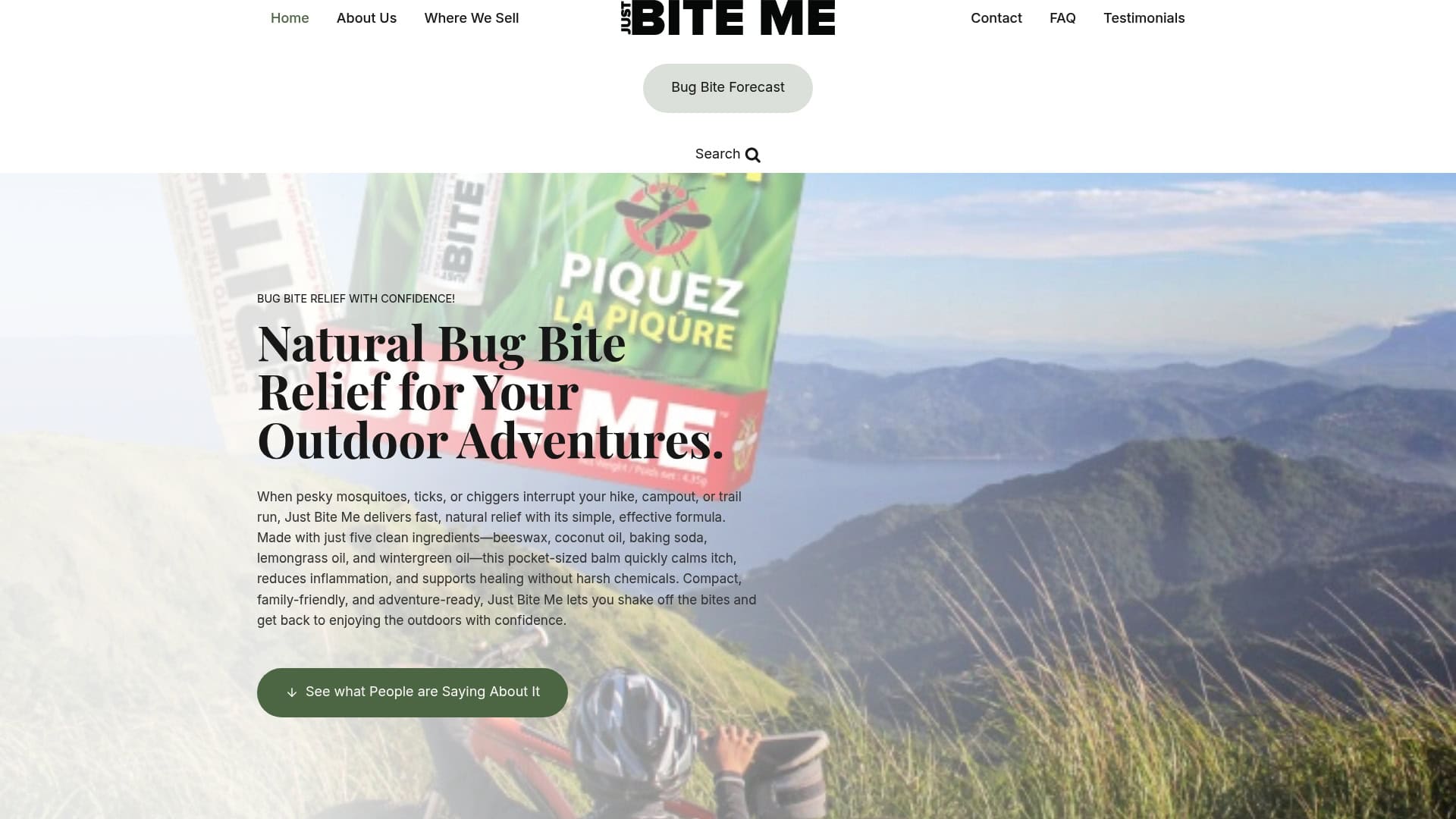
When you’re out on the trail with your family and something bites, you want a solution that’s clean, ready, and honest about what it does. The Just Bite Me balm delivers exactly that: five plant-based ingredients in a compact, portable format designed for hikers, campers, and outdoor families across the US.
It checks every box on the buying checklist: transparent ingredients, a beeswax-and-coconut-oil base, no synthetic additives, and clear labeling. For families with young kids, it’s a chemical-free option that fits neatly into any outdoor itch relief kit.
Disclaimer: Just Bite Me balm is for temporary symptom relief only. If you or anyone in your group shows signs of a severe allergic reaction, call 911 immediately and use epinephrine if prescribed.
Ready to pack smarter? Grab your Just Bite Me balm at justbiteme.com before your next trip out.
Useful sources and further reading
These are the medical and public health sources referenced throughout this article. Each one is worth bookmarking for clinical details and emergency protocols.
- MedlinePlus — Bee, Wasp, Hornet, or Yellow Jacket Sting: Authoritative guidance on stinger removal, epinephrine use, and emergency care steps from the US National Library of Medicine.
- MedlinePlus — Insect Bites and Stings: Covers infection signs and when to seek clinician care for worsening reactions.
- Cleveland Clinic — Bee Sting: Practical symptom management guidance, including cold compress and antihistamine use.
- Mayo Clinic — Insect Bites and Stings First Aid: Step-by-step first-aid protocol from a leading US medical center.
- NHS — Insect Bites and Stings: Includes the warning against household neutralizers like toothpaste and baking soda.
- Johns Hopkins Medicine — Bites and Stings: Prevention strategies and treatment overview from a top US academic medical center.
- Medical News Today — Aloe Vera, Honey, and Witch Hazel: Evidence review of common natural topical ingredients and their realistic benefits.
- Knockout Mosquito — Avoiding and Treating Mosquito Bites: Practical prevention and treatment guidance from a mosquito-control specialist.
This article is general information, not medical advice. Confirm current emergency protocols with a qualified healthcare provider or primary source for your specific situation.