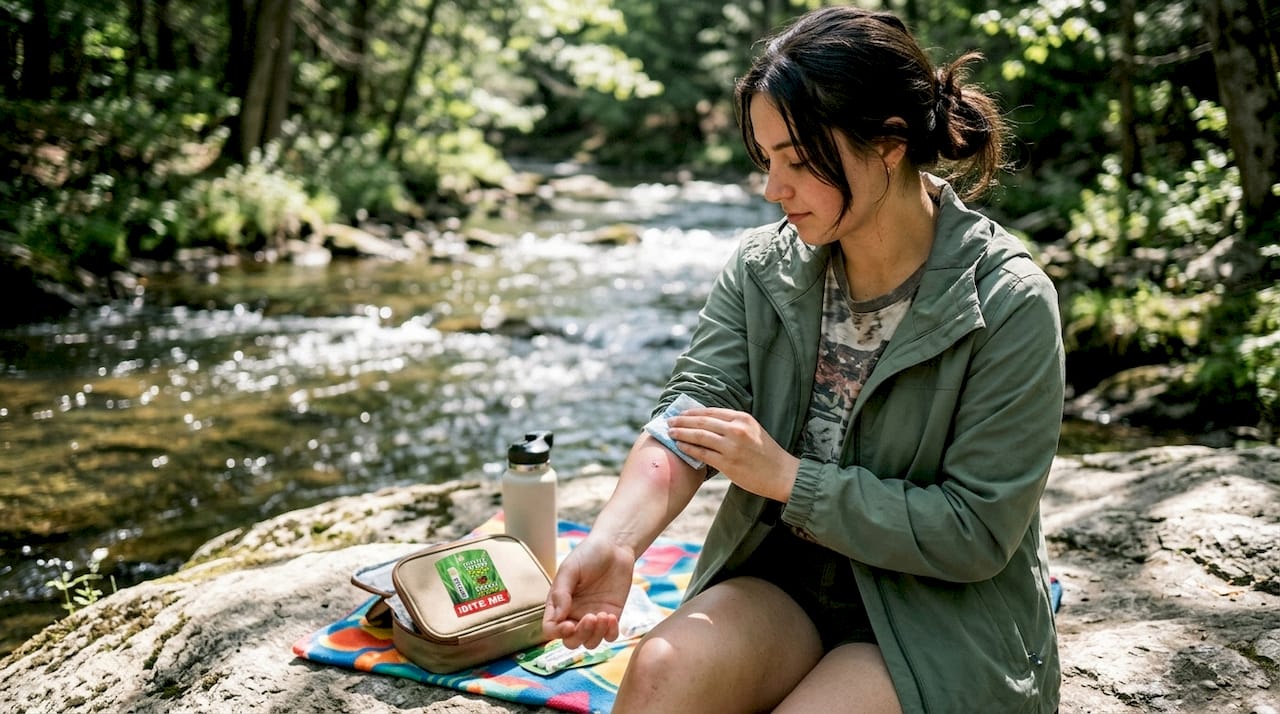
Reduce Inflammation Naturally from Bug Bites: 2026 Guide
Natural inflammation reduction for bug bites is defined as using cold therapy, botanical ingredients, and skin barrier support to calm swelling, redness, and itch without synthetic chemicals. The most effective first step is applying a cold compress within minutes of a bite. Remedies like colloidal oatmeal, aloe vera gel, and baking soda paste have solid scientific backing for soothing irritated skin. Whether you are hiking a trail, camping with family, or just spending an afternoon outdoors, knowing how to reduce inflammation naturally from bug bites keeps you comfortable and in the moment.
What causes inflammation and itching in bug bites?
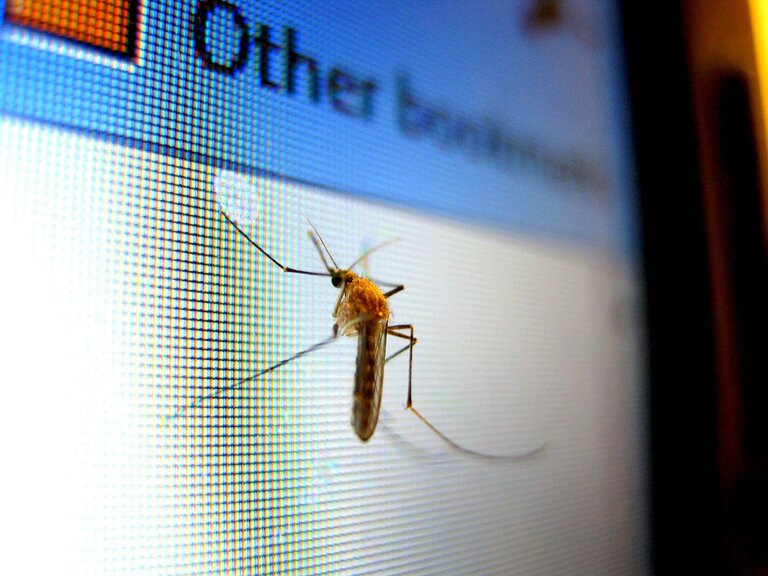
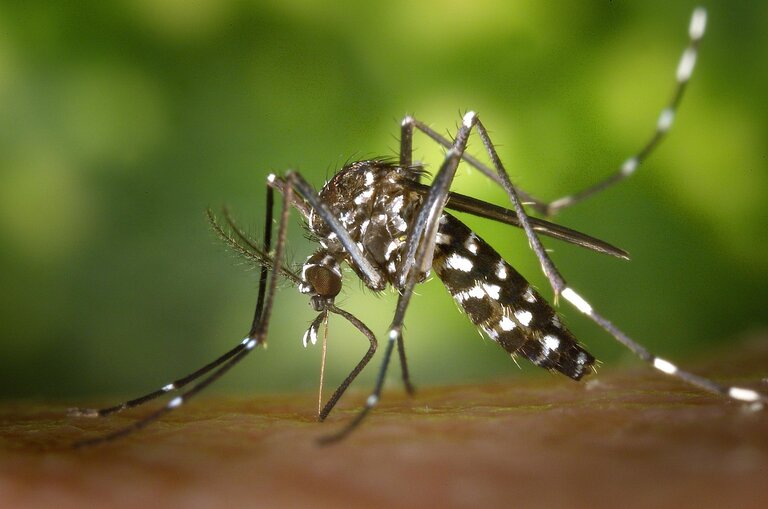
Bug bite inflammation starts with your immune system, not the bite itself. When a mosquito, bee, or other insect breaks your skin, it injects saliva or venom containing foreign proteins. Your immune system reads those proteins as a threat and triggers a histamine release.
Histamine is the chemical responsible for the classic bite reaction: swelling, redness, and that relentless itch. It binds to nerve endings in the skin, which is why the urge to scratch feels so immediate and intense. The severity of your reaction depends on how strongly your immune system responds, which varies from person to person.
Here is what happens in sequence when you get bitten:
- Insect injects saliva or venom into the skin, introducing foreign proteins.
- Immune cells detect the intrusion and release histamine and other inflammatory compounds.
- Blood vessels dilate near the bite site, causing redness and warmth.
- Fluid leaks into surrounding tissue, producing the familiar raised welt and swelling.
- Nerve endings activate, generating the itch signal sent to your brain.
Scratching feels satisfying for about two seconds, then makes everything worse. Scratching a bite increases local inflammation, breaks the skin barrier, and opens a direct path for bacteria. That is how a minor mosquito bite becomes an infected wound. The goal of every natural remedy covered here is to interrupt this cycle early, before scratching takes over.
Which natural remedies scientifically reduce bite inflammation?
The most effective natural approach combines cold therapy with botanical ingredients that target the histamine response and support skin repair. Each remedy below works through a distinct mechanism, and using them in the right order matters.
Cold compress
A cold compress applied for 10 minutes constricts blood vessels near the bite, which directly reduces swelling, pain, and itch. This is the fastest natural intervention available and costs nothing. Wrap ice or a cold pack in a thin cloth to protect skin from frostbite, and repeat every hour as needed.
Colloidal oatmeal
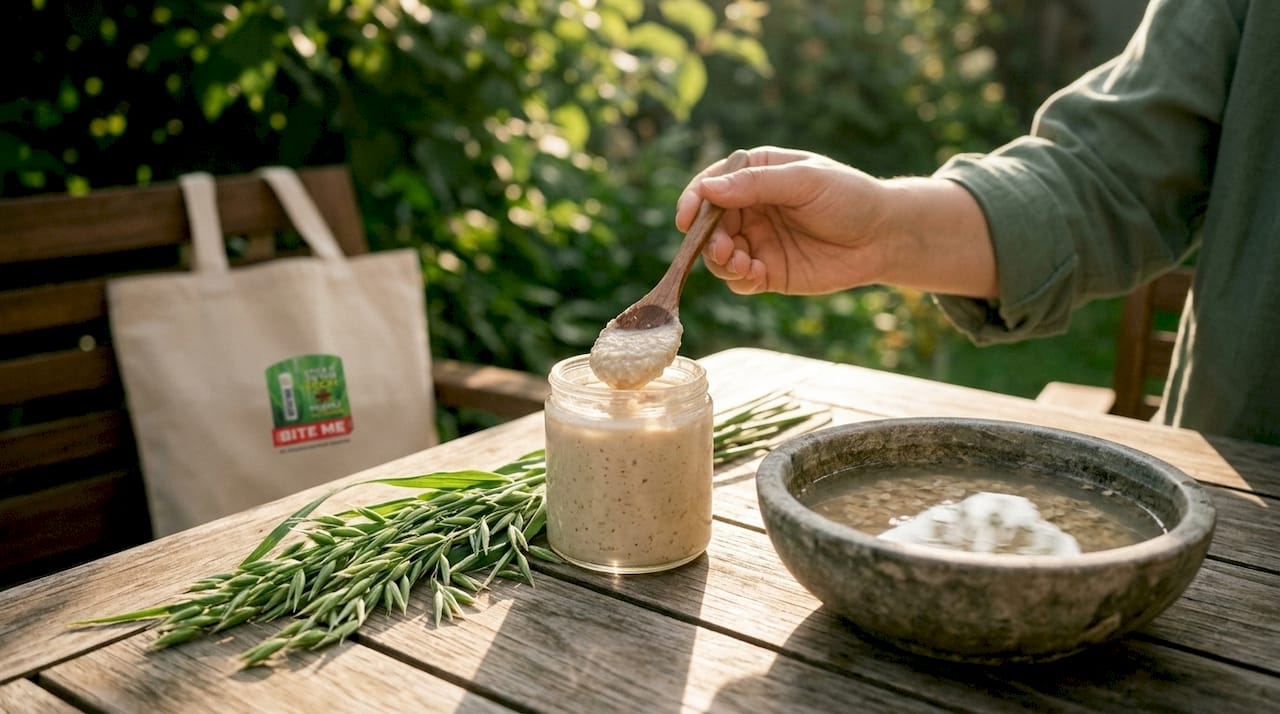
Colloidal oatmeal contains avenanthramides that calm irritated skin and reduce inflammation at the cellular level. These compounds also restore the skin barrier, which is critical because a damaged barrier lets more irritants in and slows healing. You can apply it as a thick paste directly to the bite or soak the affected area in an oatmeal bath.
Aloe vera gel
Aloe vera gel delivers a cooling sensation on contact and contains compounds that reduce redness and swelling. It absorbs quickly, leaves no residue, and works well as a follow-up after cold therapy. Use pure aloe gel rather than products with added fragrances, which can irritate already-sensitive skin.
Baking soda paste
The CDC recommends baking soda paste as a simple, effective option for temporary itch relief. Mix one tablespoon of baking soda with just enough water to form a thick paste, apply it to the bite, and leave it on for at least 10 minutes before rinsing. The alkaline pH helps neutralize some of the acidic irritants in insect saliva.
Chamomile tea bags
Chamomile pressed on a bite for 10 minutes delivers terpenoids and flavonoids directly to the skin, both of which have documented anti-inflammatory and antioxidant effects. Steep the tea bag for 20 minutes first to maximize the concentration of active compounds, then let it cool before applying.
Pro Tip: Steep two chamomile tea bags, use one on your bite, and drink the other as tea. Chamomile taken internally also has mild anti-inflammatory effects that complement topical use.
A word of caution: vinegar and undiluted essential oils are popular online but can irritate sensitive skin and worsen burning, especially on broken or scratched skin. Stick with the remedies above for reliable, low-risk results.
How to safely apply natural remedies step by step
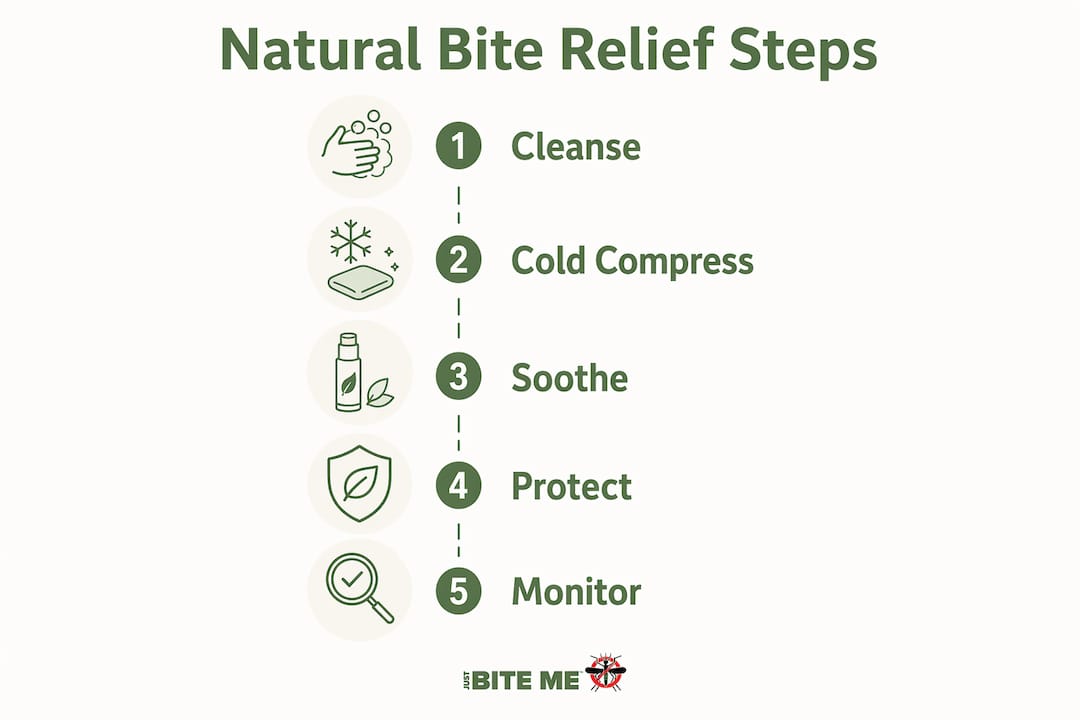
The most effective natural bite care follows a specific order: cleanse, cool, then soothe with botanicals. Skipping steps or reversing the order reduces effectiveness and can introduce bacteria.
Clean the bite area. Wash gently with mild soap and cool water for 20–30 seconds. Pat dry with a clean cloth. Do not scrub, which aggravates inflammation.
Apply a cold compress. Wrap a cold pack or ice cubes in a thin cloth. Hold it against the bite for 10 minutes. Remove for at least 20 minutes before reapplying. Repeat up to four times in the first two hours.
Prepare your botanical remedy. Choose one: colloidal oatmeal paste, aloe vera gel, baking soda paste, or a cooled chamomile tea bag. Do not layer multiple remedies at once, as combining them makes it harder to identify what works or what irritates.
Apply the remedy. Use clean fingers or a cotton pad. Cover the bite and a small margin of surrounding skin. Leave the remedy on for the time specified: 10 minutes for baking soda and chamomile, 15–20 minutes for oatmeal paste, and as long as comfortable for aloe vera.
Rinse and pat dry. Remove paste-based remedies with cool water. Let the skin air dry or pat gently.
Repeat as needed. Most minor bites respond well within 24–48 hours of consistent treatment.
Pro Tip: Keep a small tube of pure aloe vera gel in your pack or cooler during outdoor trips. It doubles as sunburn relief and stays effective for months without refrigeration.
Here is a quick reference for timing and frequency:
| Remedy | Application time | Frequency |
|---|---|---|
| Cold compress | 10 minutes on, 20 minutes off | Up to 4 times in first 2 hours |
| Colloidal oatmeal paste | 15–20 minutes | 2–3 times daily |
| Aloe vera gel | Until absorbed | As needed throughout the day |
| Baking soda paste | 10 minutes, then rinse | 2–3 times daily |
| Chamomile tea bag | 10 minutes | 2–3 times daily |
Seek medical care if the bite area shows red streaking, significant warmth spreading beyond the bite, fever, or difficulty breathing. These are signs of infection or a serious allergic reaction that natural remedies cannot address.
Common mistakes that make bug bite inflammation worse
Most natural remedy failures come from a handful of predictable errors. Knowing them in advance saves you a lot of discomfort on the trail.
- Applying ice directly to skin. Direct ice contact causes tissue damage and can worsen inflammation. Always use a cloth barrier.
- Using vinegar or garlic on broken skin. These are acidic or pungent irritants that worsen burning and inflammation on raw or scratched skin. Skip them entirely.
- Layering multiple remedies at once. Combining baking soda, vinegar, and essential oils creates unpredictable chemical interactions and makes skin reactions harder to trace.
- Scratching between treatments. Every scratch undoes the progress of your last application. Keep nails short and consider covering the bite with a loose bandage if scratching is hard to resist.
- Stopping treatment too soon. One application rarely resolves inflammation. Consistent treatment over 24–48 hours is what produces real results.
- Ignoring worsening symptoms. Natural remedies have a real ceiling. Severe or systemic allergic reactions require emergency medical care, not more oatmeal paste.
“The most common mistake people make with bug bites is reaching for whatever is in the kitchen cabinet without thinking about whether it is safe for broken skin. Vinegar, garlic, and undiluted essential oils all sound natural, but they can turn a minor bite into a painful skin reaction. Simple, gentle, and consistent beats aggressive every time.”
Knowing when to stop home treatment is as important as knowing how to start it. If symptoms worsen after 48 hours of consistent natural care, or if you see signs of infection, step up to over-the-counter hydrocortisone cream or consult a healthcare provider.
How to prevent severe inflammation from bites during outdoor activities
Prevention is always faster than treatment. A few habits before and during outdoor time dramatically reduce both the number of bites you get and the severity of your skin’s reaction when bites do happen.
- Wear protective clothing. Long sleeves, pants, and light-colored fabrics reduce exposed skin and make it harder for insects to land and bite. Tuck pants into socks in high-grass areas.
- Use natural insect repellents. Oil of lemon eucalyptus is the only plant-based repellent recognized by the CDC as effective against mosquitoes. Apply it to exposed skin before heading out.
- Manage your environment. Eliminate standing water near your campsite or yard, since mosquitoes breed in as little as a bottle cap of water. Set up camp away from dense brush and shaded, damp areas where insects concentrate.
- Maintain skin barrier health. Well-moisturized skin with an intact barrier reacts less severely to bites. Apply a gentle, fragrance-free moisturizer daily, especially before outdoor activities.
- Carry a field-ready natural remedy so you can treat bites immediately rather than waiting until you return to camp or home.
- Know your personal reaction history. If you have had severe reactions to stings or bites before, carry an epinephrine auto-injector and inform your hiking partners.
Early treatment is the single biggest factor in how quickly inflammation resolves. The longer a bite goes untreated, the more histamine accumulates in the tissue and the harder it is to calm the reaction naturally.
Key Takeaways
Natural remedies work best when applied in sequence: cleanse, cool with cold therapy, then soothe with botanicals like colloidal oatmeal, aloe vera, or chamomile.
| Point | Details |
|---|---|
| Cold compress first | Apply for 10 minutes within the first hour to reduce swelling and itch fast. |
| Colloidal oatmeal is the strongest botanical | Avenanthramides reduce inflammation and repair the skin barrier simultaneously. |
| Avoid vinegar and essential oils on broken skin | These irritants worsen burning and can cause secondary skin reactions. |
| Scratching undermines every remedy | Breaking the skin barrier increases infection risk and prolongs inflammation. |
| Know when to seek medical care | Red streaking, spreading warmth, fever, or breathing difficulty require professional treatment. |
What we have learned from years on the trail
After countless hikes, camping trips, and outdoor adventures, we have tested just about every natural bite remedy out there. Here is the honest truth: cold therapy is the one step most people skip because it feels too simple. They go straight for a paste or a spray and wonder why the swelling is still there an hour later. Cold compress first, every time. It makes every subsequent remedy work better.
We have also learned that the urge to try everything at once is counterproductive. Pick one botanical remedy, apply it consistently, and give it time. Colloidal oatmeal is our go-to for anything that involves real swelling or a skin barrier that looks compromised. Aloe vera handles the everyday mosquito bite beautifully and is easy to carry.
The other thing we cannot stress enough: know your limits. Natural remedies are genuinely effective for minor bites and mild reactions. They are not a substitute for medical care when a reaction turns serious. We have seen hikers push through worsening symptoms because they did not want to cut a trip short. That is never worth it. Check out our hiker’s safety guide if you want a clear breakdown of which symptoms mean it is time to head out.
The best outdoor experience is one where a bite is a minor inconvenience, not a ruined trip. Preparation, a solid treatment sequence, and the right products in your pack make that possible.
— Just Bite Me
Natural bite relief built for the outdoors
Justbiteme was built for exactly this situation: you are out on a trail, a determined little biter finds you, and you need relief right now without digging through a first-aid kit.
Our balm uses five clean, organic ingredients including beeswax, coconut oil, and essential oils to temporarily soothe irritation and itching from mosquito bites, bee stings, chiggers, and poison ivy. It fits in a pocket, works on contact, and contains nothing you cannot pronounce. For families and solo adventurers alike, it is the kind of natural bite relief that earns a permanent spot in your pack. If you want to understand what makes a natural balm actually effective, our guide on what makes a bite balm work breaks it down ingredient by ingredient.
FAQ
What is the fastest natural way to reduce bug bite swelling?
A cold compress applied for 10 minutes is the fastest natural method for reducing bite swelling. It constricts blood vessels immediately, cutting off the fluid buildup that causes the raised welt.
Does colloidal oatmeal actually help with bug bites?
Yes. Colloidal oatmeal contains avenanthramides, compounds that reduce skin inflammation and support the skin barrier. Apply it as a paste for 15–20 minutes for measurable itch and redness relief.
Is baking soda safe to use on bug bites?
Baking soda paste is safe on intact skin and is recommended for temporary itch relief. Mix one tablespoon with water, apply for 10 minutes, then rinse. Avoid using it on broken or scratched skin.
Why does scratching a bug bite make it worse?
Scratching releases more histamine into the tissue and breaks the skin barrier, which increases both inflammation and infection risk. Keeping the area clean and treated is the only way to break the cycle.
When should I stop using natural remedies and see a doctor?
Stop home treatment and seek medical care if you notice red streaking from the bite, spreading warmth, fever, or any difficulty breathing. These signs indicate infection or a serious allergic reaction that requires professional intervention.