Bug Bite Care Beeswax Balm: Natural Relief That Works
A beeswax balm is a thick, natural topical made from beeswax, carrier oils, and botanical ingredients that work together to calm irritated skin after a bug bite. The beeswax forms a breathable, protective barrier that locks moisture and active ingredients against the bite site longer than a lotion ever could. That extended contact is exactly why balms outperform quick-absorbing creams when you need sustained itch relief on the trail.
Here is what a quality bug bite care beeswax balm does for you:
- Locks in moisture while keeping dirt and bacteria out of the bite
- Delivers soothing botanicals like calendula, lavender, and tea tree oil directly to irritated skin
- Reduces the urge to scratch by creating a physical, cooling layer over the bite
- Supports skin healing without synthetic preservatives or harsh chemicals
- Travels easily in a compact stick or tin format, ready whenever those determined little biters find you
Justbiteme’s balm is a great example of this approach in action: five clean ingredients, including beeswax and coconut oil, designed specifically for outdoor enthusiasts dealing with mosquito bites, bee stings, chiggers, and poison ivy. It is temporary relief, not a medical treatment, but for minor bites it is exactly what you need to stay comfortable and keep moving.
Table of Contents
- How to make your own DIY beeswax bug bite balm
- Which ingredients make a beeswax balm most effective for bites?
- How to apply beeswax balm safely on a bug bite
- When a balm is not enough: precautions and signs to see a doctor
- Why dermatologists and natural health experts trust beeswax balms
- Justbiteme has the natural balm built for your next adventure
- Key Takeaways
How to make your own DIY beeswax bug bite balm
Making a homemade bug bite salve is simpler than most people expect, and the payoff is full control over every ingredient. Effective DIY beeswax balms combine beeswax, a carrier oil, shea butter, and targeted essential oils to create a soothing, anti-inflammatory ointment you can customize to your skin’s needs.
What you need:
- 1 part beeswax pellets (pellets melt evenly and measure cleanly)
- Several parts carrier oil (coconut oil, olive oil, or sweet almond oil)
- Optional: 1–2 tablespoons shea butter for extra softness
- Several drops of lavender essential oil per ounce of finished balm
- Several drops of tea tree essential oil per ounce
- A few drops of vitamin E oil for antioxidant support and shelf life
Steps:
- If infusing herbs, steep dried calendula or plantain in your carrier oil over very low heat for 2–4 hours, then strain.
- Combine beeswax pellets and your carrier oil (or infused oil) in a double boiler over medium-low heat.
- Stir gently until the beeswax melts completely into the oil.
- Remove from heat and let the mixture cool for 2–3 minutes before adding essential oils. Adding them while the mixture is still boiling hot degrades their therapeutic compounds.
- Pour immediately into tins or lip balm tubes before the mixture sets.
- Let cool at room temperature for at least one hour before capping.
Pro Tip: Adjust your beeswax ratio to suit the climate. A 1:4 beeswax-to-oil ratio produces a softer, more spreadable balm ideal for cooler weather. Bump it to 1:3 for a firmer stick that holds up in summer heat without melting in your pack.
Homemade balms typically last 6–12 months stored in a cool, dry place. Vitamin E oil extends that window while adding skin-repair benefits. The transparency of knowing exactly what went into your balm is something no store-bought product can match, especially for families with sensitive skin.

Which ingredients make a beeswax balm most effective for bites?
The antioxidant, antibacterial, and moisturizing properties of beeswax give it a head start over most synthetic bases. But the real power of an organic bug bite relief balm comes from the synergy between beeswax and the botanicals it carries.
- Beeswax acts as a natural humectant, drawing moisture to the skin and forming a layer that inhibits bacteria at the bite site
- Calendula-infused oil brings well-documented anti-inflammatory and skin-repairing properties, making it a go-to for irritated or reactive skin; you can read more about these soothing balm ingredients on the Justbiteme site
- Plantain leaf infusion (the common garden weed, not the banana) has a long history as a natural drawing agent that calms swelling and redness
- Lavender essential oil soothes itching and carries mild antiseptic properties, making it one of the most versatile additions to any anti-itch balm
- Tea tree oil offers well-studied antimicrobial effects that help keep the bite site clean while reducing inflammation
- Peppermint or chamomile add a cooling or calming sensation that interrupts the itch-scratch cycle
- Coconut oil hydrates and soothes while contributing its own mild antimicrobial properties as a carrier
- Vitamin E rounds out the formula with antioxidant support that also helps the balm stay stable longer
For those curious about the broader benefits of bee-derived botanicals, blue bee balm benefits covers how these plant compounds interact with skin in more detail.
How to apply beeswax balm safely on a bug bite
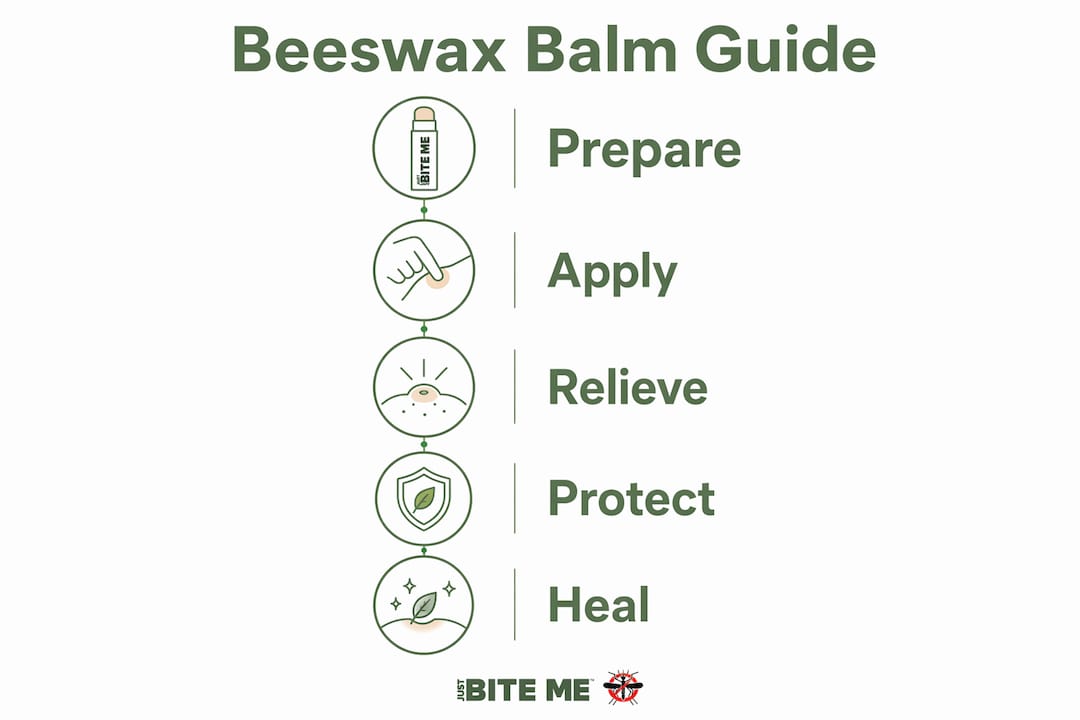
Getting the most from your soothing beeswax ointment starts before you even open the tin. Clean the bite area gently with mild soap and water first. That single step lowers infection risk significantly and gives the balm a clean surface to adhere to.
- Patch test first, especially with a new balm or one containing essential oils. Apply a small amount to your inner wrist and wait 20–30 minutes before using it on a bite.
- Apply a thin, even layer directly over the bite. You do not need a thick glob; the beeswax barrier forms with a light coat.
- Reapply 2–3 times daily or whenever the itch returns. Avoid scratching between applications, which can break the skin and invite infection.
- Store your balm in a cool, dry place away from direct sunlight. Heat softens beeswax balms and can cause separation.
- Try chilling the balm in the refrigerator for 10–15 minutes before applying. The cool temperature adds an immediate soothing effect on inflamed skin that warm balm simply cannot replicate.
For field use, a stick format like Justbiteme’s is especially practical. No fingers in a tin, no mess, and it fits in a shirt pocket.

When a balm is not enough: precautions and signs to see a doctor
Natural balms are excellent for minor bug bite symptoms, but they have real limits. Knowing those limits keeps you safe.
Seek immediate medical care if you notice any of these after a bite:
- Difficulty breathing or tightness in the throat
- Swelling of the face, lips, or tongue
- A widespread rash spreading beyond the bite site
- Fever, chills, or flu-like symptoms
- Rapid heartbeat or dizziness
These are signs of a severe allergic reaction that requires emergency attention, not balm. Bites from venomous spiders, ticks, or unknown insects also warrant a call to your healthcare provider even when symptoms seem mild at first.
On the balm side, some people react to essential oils or beeswax itself. If you notice increased redness, burning, or a new rash after applying, stop use immediately and wash the area with soap and water. Beeswax allergies are uncommon but real, and propolis sensitivity (from the hive) can trigger reactions in some individuals.
Balm supports healing. It does not replace conventional treatment when the situation calls for it.
Why dermatologists and natural health experts trust beeswax balms
The AAD’s guidance on bug bite care centers on soothing itching, reducing swelling, and protecting skin from further irritation. A well-formulated beeswax balm addresses all three goals without synthetic additives.
The physical barrier beeswax creates is genuinely different from what a lotion provides. Lotions absorb quickly and leave the skin exposed. Beeswax stays on the surface, extending the time active ingredients like lavender or tea tree oil remain in contact with the bite. That prolonged contact is what makes the relief last.
Justbiteme’s five-ingredient formula reflects exactly this principle: keep the ingredient list short, keep it organic, and let the beeswax do its job as the delivery system. For families and outdoor adventurers who want chemical-free bug bite treatment, that simplicity is a feature, not a limitation. Dermatologists consistently recommend patch testing and keeping bites clean as the foundation of care, and beeswax balm fits naturally into that protocol.
Justbiteme has the natural balm built for your next adventure
When you have spent time reading about DIY recipes and ingredient lists, you know exactly what you want in a balm: clean ingredients, real soothing power, and something that actually fits in your pack.

Justbiteme is built for that. Five organic ingredients, including beeswax and coconut oil, deliver temporary relief from mosquito bites, bee stings, chiggers, and poison ivy without a single synthetic preservative. No complicated formulas, no mystery chemicals, just a compact stick you grab and go. It is the natural insect bite remedy we designed for hikers, campers, gardeners, and anyone who spends real time outdoors.
Ready to skip the scratch? Grab your Justbiteme balm and keep the itch from slowing you down.
Key Takeaways
A beeswax balm’s breathable barrier is what separates it from ordinary lotions: it holds soothing botanicals against the bite site longer, delivering more sustained itch relief with fewer ingredients.
| Point | Details |
|---|---|
| Beeswax barrier advantage | Beeswax locks moisture and active botanicals against the bite longer than water-based lotions. |
| DIY ratio to know | A 1:4 beeswax-to-oil ratio is a reliable starting point; adjust firmer for warm weather, softer for cool. |
| Essential oil timing | Always add essential oils after the wax mixture cools slightly to preserve their therapeutic compounds. |
| When to seek care | Breathing difficulty, facial swelling, or spreading rash after a bite requires immediate medical attention, not balm. |
| Justbiteme | Five organic ingredients in a portable stick format, built for outdoor relief from mosquito bites, stings, and chiggers. |