Family Outdoor Bug Bite Kit: Starter Pack and Safety Guide
Pack a kid-safe repellent (20% picaridin or 20% DEET), a Justbiteme relief balm, a fine-tipped tick tool, a suction sting extractor, and a ThermaCELL area repeller, and you have a family outdoor bug bite kit that handles the vast majority of outdoor bite situations. Prevention plus quick relief plus tick removal: that’s the whole game.
Your quick-start checklist:
- Kid-safe repellent: 20% picaridin (gentler on gear) or 20% DEET (widely available)
- Justbiteme natural relief balm: five clean ingredients, compact, field-tested for mosquito bites, bee stings, chiggers, and poison ivy
- Fine-tipped tick tweezers or a dedicated tick removal tool
- Suction sting extractor for bee and wasp stings
- Small antiseptic wipes and adhesive bandages
- ThermaCELL or mat-based area repeller for picnic tables and static camp zones
Table of Contents
- What goes in a family outdoor bug bite kit?
- How to prevent bites before they find you
- How to treat common bites and stings quickly
- What age and safety rules should families follow?
- Should you buy a ready-made kit or build your own?
- Why Justbiteme belongs in every family kit
- Key Takeaways
- The kit that actually made dinner comfortable
- Grab the Justbiteme starter pack before your next trip
- Useful sources for families who want to dig deeper
What goes in a family outdoor bug bite kit?
A solid outdoor insect repellent kit has three jobs: prevent bites before they happen, remove hazards fast when they do, and soothe irritation so the trip keeps going. Here’s what earns a spot in the bag and why.
Repellent choices
Moderate DEET concentrations provide several hours of protection and are the most widely available option. Higher concentrations mainly extend duration while increasing the risk of damaging synthetic fabrics and plastics, so higher strengths are unnecessary for routine family use. 20% picaridin matches DEET’s effectiveness against mosquitoes and ticks without the smell or gear-damage risk, making it the preferred pick for families who want to protect expensive rain jackets and sunglasses. Oil of lemon eucalyptus (OLE/PMD) is the only plant-based option the CDC endorses for real protection, but it is not suitable for children under 3.

Relief balm
Look for a balm with a short, clean ingredient list you can actually read. Justbiteme uses five ingredients: beeswax, coconut oil, baking soda, lemongrass oil, and wintergreen oil. That’s it. The field-tested formula temporarily relieves minor skin irritation and itching from mosquito bites, bee stings, chiggers, and poison ivy. Compact enough to drop in a daypack pocket, it’s the relief item we recommend anchoring any family camping bug remedy kit around.
Patch-test any new topical product on a child’s inner forearm and wait 24–48 hours before wider use. Natural does not automatically mean safe for every skin type, and essential oil–based balms can cause reactions in sensitive kids.
Fabric and gear treatments
Permethrin-treated clothing is one of the highest-impact prevention layers available. Permethrin spray applied to shirts, pants, socks, and hats at home kills or disables ticks and mosquitoes on contact and remains effective through multiple washes. Two rules: let the fabric dry completely before wearing, and never apply permethrin directly to skin. For families who’d rather skip the DIY step, tick-proof outdoor clothing comes pre-treated and ready to wear.

Area protection
A ThermaCELL-style device creates a protection zone of about 15 to 20 feet around a picnic table or camp chair cluster. Set it up before dusk, not after the mosquitoes arrive. Rechargeable models eliminate the need to track down fuel cartridges mid-trip.
Mechanical tools and first-aid basics
- Fine-tipped tick tweezers or a dedicated tick removal tool
- Suction sting extractor
- Small antiseptic wipes
- Adhesive bandages and a few gauze pads
- Disposable gloves (for tick removal and wound care)
Extras worth adding
No-see-um mesh rated at 0.6mm or finer is a must for coastal or wetland camping where standard mosquito netting (1.2–1.5mm) lets biting midges walk right through. A small battery-powered fan clipped to a tent door or picnic table blowing outward creates an air barrier that stops weak-flying mosquitoes from entering. Travel 1oz sizes of repellent and balm keep the kit TSA-friendly for flights.
Pro Tip: Pack your kit in two layers: a small zip bag for the daypack (repellent, balm, tick tool, wipes) and a larger bag in the car for the full kit including the ThermaCELL, fan, and extra bandages.
How to prevent bites before they find you
Layered defenses reduce bites far more than any single product. One repellent spray is a start. A full prevention system means treating your clothes, your skin, and the air around camp as three separate layers.
- Choose your campsite deliberately. Set up away from standing water, low-lying wet meadows, and dense leaf litter. A breezy, elevated spot cuts mosquito pressure significantly before you open a single bottle.
- Pre-treat clothing with permethrin at home. Spray shirts, pants, socks, and hats the night before the trip and hang them to dry. A controlled field trial found that treating tent exteriors with permethrin reduced mosquito bites by about 44% over the study period compared to untreated tents. Treating your clothing delivers a similar contact-kill effect on ticks crossing a treated sock.
- Apply skin repellent before you head out, not after the first bite. Use 20% picaridin or 20% DEET on all exposed skin. Apply to your own hands first, then rub onto a child’s skin, avoiding eyes and mouth.
- Run a ThermaCELL at your picnic table or fire ring. The device builds a 15–20 foot protection bubble for static activities. Light it 10 minutes before you sit down.
- Clip a small fan to the tent door blowing outward. Mosquitoes are weak fliers. A modest outward airflow prevents them from entering and is one of the lowest-cost, highest-impact hacks available to family campers.
- Check tent mesh specs for coastal or wetland sites. Standard mosquito netting at 1.2–1.5mm lets no-see-ums through. Upgrade to 0.6mm no-see-um mesh when camping near the coast or in wetlands.
Pro Tip: Treat the kids’ clothes the night before departure and hang them off the garage door to dry. You’ll arrive at camp with one full prevention layer already in place before anyone steps out of the car.
How to treat common bites and stings quickly
Stop the reaction, remove the hazard, clean the area, soothe it, and monitor. That five-step sequence covers nearly every bite or sting a family will encounter outdoors.

Mosquito bites
Wash the area with soap and water, then apply Justbiteme balm directly to the bite. A cool compress for a few minutes reduces swelling. Avoid scratching, which breaks skin and invites infection. If itching is severe and the balm alone isn’t enough, a 1% hydrocortisone cream applied sparingly can help.
Tick removal
Remove a tick promptly using fine-tipped tweezers or a dedicated tick tool. Grasp the tick as close to the skin surface as possible and pull upward with steady, even pressure. Do not twist or jerk. After removal, clean the bite area with antiseptic. Save the tick in a sealed bag or container for identification if symptoms develop later.
The CDC recommends removing ticks as quickly as possible. A tick attached for fewer than 24 hours is unlikely to transmit Lyme disease, but prompt removal is the single most effective step you can take.
Seek medical advice if the tick was embedded for more than 24 hours, if a bull’s-eye rash appears, or if fever develops within a few weeks of the bite.
Bee and wasp stings
If a stinger is visible, scrape it out sideways with a fingernail or credit card edge. Do not squeeze with tweezers, which can push more venom in. Apply a cold compress, then use the Justbiteme balm for itch and irritation relief. Know the signs of anaphylaxis: hives spreading beyond the sting site, throat tightening, difficulty breathing, or dizziness. If any of these appear, use an epinephrine auto-injector if available and call 911 immediately.
Chiggers and biting midges
Wash the affected area thoroughly with soap and water as soon as possible. Chiggers do not burrow into skin, but their saliva causes intense itching that can last days. Apply Justbiteme balm to reduce inflammation naturally and resist the urge to scratch. Watch for signs of secondary infection: spreading redness, warmth, or pus.
Poison ivy and poison oak
Wash the exposed area with soap and water within 10 minutes of contact to remove urushiol oil. Avoid home remedies that further irritate the skin. Apply the Justbiteme balm for itch relief. If the rash covers a large area, affects the face or genitals, or shows signs of infection, see a clinician.
Pro Tip: Keep a pair of disposable gloves in the kit specifically for tick removal. It protects your hands from contact with the tick and makes the whole process faster and cleaner.
What age and safety rules should families follow?
Pick your repellent and balm by child age, and patch-test before full use. That’s the short version. Here’s the detail that actually matters.
DEET guidance
The AAD endorses EPA-registered repellents including DEET-containing products at appropriate concentrations. For family use, 20–30% DEET provides several hours of protection. Keep it off children’s faces and hands. Concentrations above 30% mainly extend duration and increase the risk of damaging synthetic fabrics, so they’re unnecessary for most family outings.
Picaridin guidance
20% picaridin performs similarly to moderate DEET concentrations with less gear damage and a more neutral skin feel. It’s approved for family use per product labels and is the option we’d reach for first when kids are involved.
Oil of lemon eucalyptus
OLE/PMD is the only plant-based repellent with real CDC backing. A 30% formula provides roughly six hours of protection. Do not use it on children under 3 years old.
Patch-testing natural balms
Apply a small amount of any new essential oil–based balm to a child’s inner forearm. Wait 24–48 hours and check for redness, swelling, or itching before applying it more widely. This is especially worth doing with chemical-free bug bite treatments that use lemongrass, wintergreen, or other active botanicals.
When to seek medical care
Watch for these signs of allergic reactions in kids: hives spreading beyond the bite site, facial swelling, difficulty breathing, or a sudden drop in energy. For tick bites, monitor for a bull’s-eye rash or flu-like symptoms in the weeks following the bite. Infected bites show spreading redness, warmth, and sometimes pus. Any of these warrant a call to a clinician or urgent care.
Safety note: Never apply permethrin directly to skin. It belongs on fabric only.
This article is general information, not medical advice. Confirm current guidance with the CDC, AAD, or a qualified healthcare provider for your family’s specific situation.
Should you buy a ready-made kit or build your own?
Both work. Buy if you want speed and a tested combination out of the box. Build if you want to customize components and save money.
Ready-made kit pros and cons:
- Convenient: one purchase, everything included
- Components are pre-matched for compatibility
- Often includes travel-size items (TSA-friendly 1oz bottles)
- May cost more per item than buying components separately
- Harder to swap out a product you don’t like
DIY kit pros and cons:
- Lower total cost when you already own some items
- Full control over repellent type, balm brand, and tool quality
- Requires knowing what to buy (this article covers that)
- Takes 20–30 minutes to assemble the first time
Typical price ranges
| Item | Approximate cost |
|---|---|
| 20% picaridin repellent (3–4 oz) | $10 |
| Justbiteme natural relief balm | See product page |
| Permethrin clothing spray (24 oz) | $14 |
| Fine-tipped tick tweezers | $6–$10 |
| ThermaCELL rechargeable unit | $50 |
| Small battery fan | $15 |
| Suction sting extractor | $12 |
A weekend starter kit (repellent, balm, tick tool, wipes, bandages) typically runs $30–$50 DIY. A full year-round family kit adding a ThermaCELL, permethrin spray, and fan runs $80–$120.
Where to buy: Outdoor retailers like REI, big-box stores like Target and Walmart, pharmacies, and the Justbiteme camping page for the relief balm and starter pack suggestion.
Pro Tip: Before buying a pre-assembled kit, check that it lists the active ingredient and concentration on the repellent label. A kit without that information is not one you can trust for children.
Why Justbiteme belongs in every family kit
Justbiteme is recommended as the relief item in a family kit because it uses five simple natural ingredients, fits in a shirt pocket, and is field-tested for outdoor relief across the exact situations families face: mosquito bites, bee stings, chiggers, and poison ivy.
What’s in it and why it works:
- Beeswax: forms a protective barrier over irritated skin, locking in moisture and keeping debris out
- Coconut oil: a natural emollient that softens skin and helps the other ingredients absorb
- Baking soda: a mild alkaline that helps neutralize the acidic compounds in insect saliva that trigger itching
- Lemongrass oil: a soothing botanical with mild anti-inflammatory properties
- Wintergreen oil: provides a cooling sensation that temporarily masks itch signals
The formula is compact, with no synthetic fragrance, no harsh chemicals, and nothing that requires a chemistry degree to pronounce. For families who want chemical-free outdoor skin care, it’s a straightforward choice.
Five ingredients. One balm. Designed for the moment when a bite interrupts the adventure. Justbiteme keeps it simple so you can keep moving.
Safety note: Patch-test on a child’s inner forearm before the first use. The balm is designed for adults and families, so follow label guidance for young children.
Pro Tip: Tuck the balm in the same zip pocket as your tick tool and antiseptic wipes. When a bite happens, everything you need is in one place.
Key Takeaways
A complete family outdoor bug bite kit combines layered prevention (permethrin clothing, skin repellent, area device) with fast relief tools (natural balm, tick tweezers, sting extractor) to handle the vast majority of outdoor bite situations safely.
| Point | Details |
|---|---|
| Layer your defenses | Permethrin on clothes, picaridin or DEET on skin, and a ThermaCELL creating a roughly 15-foot protection zone at camp cover three separate exposure points. |
| Match repellent to age | Use 20% picaridin or 20–30% DEET for children; avoid OLE/PMD for kids under 3. |
| Remove ticks immediately | A tick attached fewer than 24 hours is unlikely to transmit Lyme disease; prompt removal is the key step. |
| Patch-test new balms | Apply to a child’s inner forearm and wait 24–48 hours before wider use, especially with essential oil formulas. |
| Justbiteme for relief | Five-ingredient natural balm covers mosquito bites, bee stings, chiggers, and poison ivy in one compact product. |
The kit that actually made dinner comfortable
Here’s our honest take: most families pack either too much or too little. They grab a can of spray at the gas station and call it done, or they order a 40-piece first-aid kit that weighs three pounds and sits in the trunk untouched. The sweet spot is a 10-item kit that covers prevention, removal, and relief without requiring a second bag.
The combination that genuinely works at a picnic table is a ThermaCELL running 10 minutes before you sit down, permethrin-treated pants on the kids, and the Justbiteme balm within arm’s reach for the one bite that sneaks through. That’s not a theory. That’s the setup that turns a mosquito-heavy summer evening into a comfortable family dinner instead of a retreat to the car.
The part most guides skip: treat the environment first, not just the people. A ThermaCELL running before anyone sits down does more for a family dinner than any amount of spray applied after the buzzing starts. Start with the air, then the clothes, then the skin. The balm handles whatever gets through.
Grab the Justbiteme starter pack before your next trip
The fastest way to build a family camping bug remedy kit is to start with the Justbiteme balm and add your repellent and tick tool around it. The Justbiteme camping page has the balm and a starter pack suggestion sized for a weekend trip, including travel-friendly formats that clear TSA without a second thought.
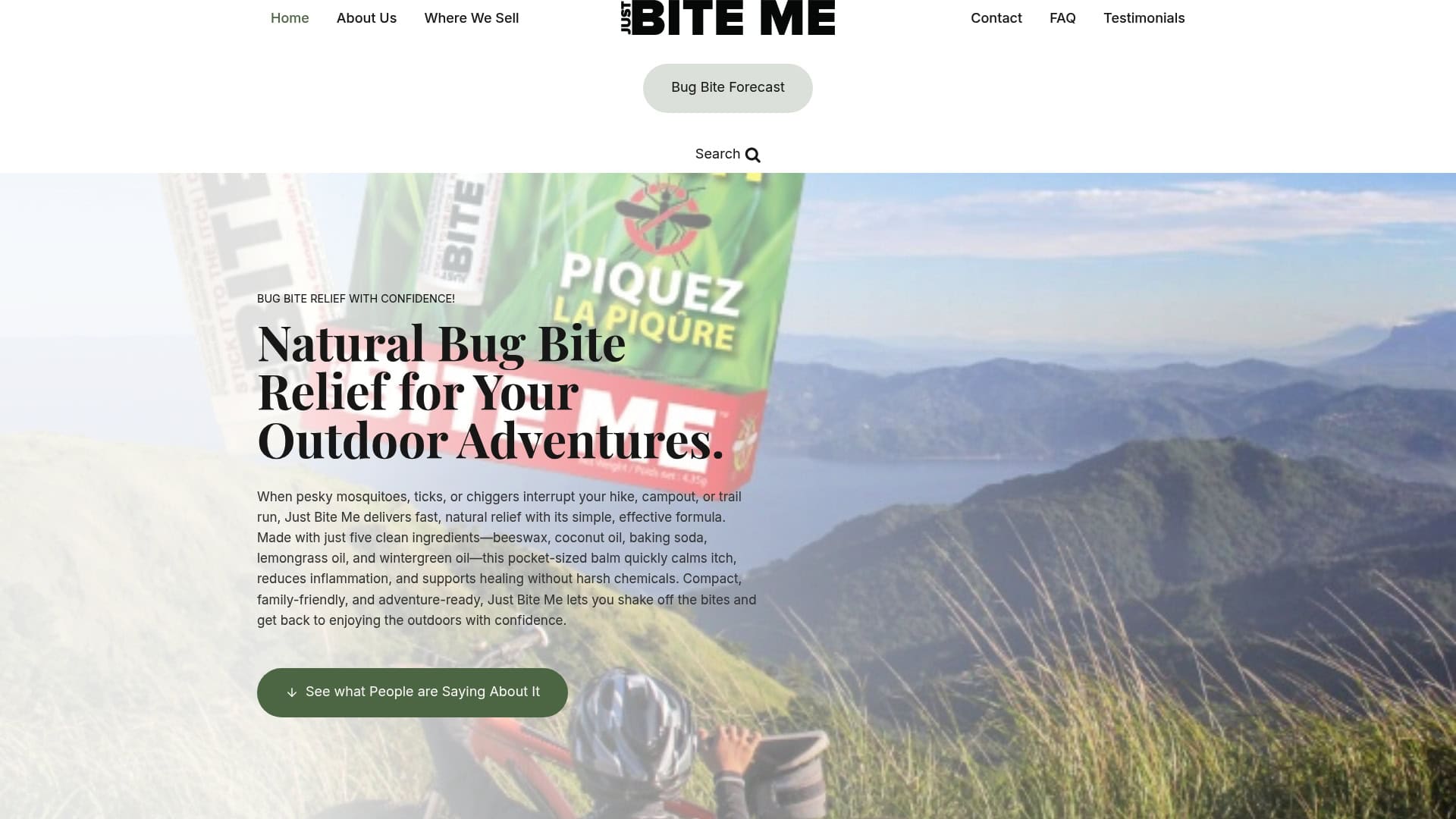
The starter pack covers the relief side of the kit: the five-ingredient natural balm for mosquito bites, bee stings, chiggers, and poison ivy, in a compact format that fits in a daypack pocket. Pair it with a 20% picaridin spray from your local outdoor retailer or pharmacy, a fine-tipped tick tool, and a ThermaCELL for the picnic table, and you have a complete outdoor bug bite care kit assembled in one shopping run.
Ready to stop reacting and start preventing? Visit Justbiteme to pick up the balm, browse the full product line, and get the kit sorted before the next adventure.
Useful sources for families who want to dig deeper
These are the primary sources behind the safety guidance, product recommendations, and prevention strategies in this article.
- AAD: Tips to prevent and treat bug bites — The American Academy of Dermatology’s guidance on EPA-registered repellents and DEET concentrations; the authoritative starting point for repellent safety.
- Camp With Joy: How to keep bugs away while camping — Covers permethrin clothing treatment longevity and picaridin vs. DEET comparison; useful for families choosing between repellent types.
- BestTentReview: How to keep bugs out of your tent — Source for the 44% bite-reduction figure from the permethrin tent trial, no-see-um mesh specs, fan air-barrier technique, and DEET concentration guidance.
- Outdoorithm: How to keep mosquitoes away while camping — Explains the ThermaCELL 15–20 foot protection zone and the layered prevention system approach.
- OutdoorsPapa: Natural ways to keep bugs away when camping — Patch-test guidance for essential oil–based products and age cautions for children.
- Justbiteme: Bug bite relief for camping — Product page for the Justbiteme balm; ingredient list, field-tested claims, and starter pack details.
- Mather Hospital: Home remedies for itchy mosquito bites — Clinical-informed overview of symptomatic relief options and when home remedies are not enough.
A note on sources: CDC and AAD guidance changes periodically. Always check the primary source directly for the most current repellent concentration recommendations and tick-borne illness reporting guidance in your region.