Why Natural Remedies Beat Chemical Creams for Families
For mild, temporary itch from mosquito bites, bee stings, or chiggers, natural remedies usually win over chemical creams — they soothe faster, carry fewer side-effect risks for kids, and fit neatly into a trail pack. That said, “natural” is not a synonym for safe: the Cleveland Clinic cautions that many products marketed as natural contain known contact allergens, and a peer-reviewed comparative review confirms that some botanical ingredients trigger contact dermatitis just as readily as synthetic ones. Patch-test every new product, and escalate to 1% hydrocortisone or a clinician when inflammation spreads or worsens.
Table of Contents
- Why natural remedies beat chemical creams for temporary bite relief
- When chemical creams are the right call — and their real risks
- Natural balm vs. 1% hydrocortisone: a field-ready comparison
- Family safety checklist and patch-test steps
- How to pick, pack, and use natural itch relief outdoors
- Justbiteme: a natural balm built for outdoor families
- What the science actually says about natural vs. chemical efficacy
- Common misconceptions about natural remedies and chemical creams
- Can natural remedies interact with conventional medications?
- Key Takeaways
- Our take: the case for keeping it simple outdoors
- Justbiteme is your trail-ready natural bite relief
- Useful sources
Why natural remedies beat chemical creams for temporary bite relief
Simple plant-based agents soothe bites through four overlapping mechanisms: barrier protection, gentle anti-inflammatory action, cooling evaporation, and mild antimicrobial effects. Together, these make a well-formulated natural balm genuinely effective for the kind of temporary, localized itch you get on a trail.
Here is how each mechanism works in practice:
- Barrier/seal: Beeswax forms a breathable film over irritated skin, protecting against further irritation while locking in moisture.
- Occlusive/emollient: Coconut oil softens the skin around a bite and reduces transepidermal water loss.
- Anti-inflammatory/soothing: Aloe vera and calendula contain compounds that calm redness and swelling at the bite site within minutes to an hour.
- Volatile cooling/antipruritic: Menthol and diluted peppermint oil trigger cold-receptor nerves, interrupting the itch signal almost immediately.
- Mild antimicrobial: Low-concentration tea tree components show antimicrobial activity, though sensitization rates rise in people with pre-existing eczema — worth knowing before you apply it to a child.
Practical field items that cover these bases: a small beeswax balm stick, a single-serve aloe gel packet, or even a plain honey packet pressed briefly against a sting. Most families notice meaningful cooling relief within minutes; deeper anti-inflammatory effects from botanicals like calendula typically build over one to several hours.
Pro Tip: Press a cool, damp cloth against the bite for 60 seconds before applying your balm. The compress reduces initial swelling and opens the skin slightly, so the balm’s soothing agents absorb more effectively.

When chemical creams are the right call — and their real risks
Reserve low-dose hydrocortisone and other clinical actives for moderate inflammation, persistent swelling, or a diagnosed allergic reaction. A comparative review of herbal and synthetic creams confirms that single-molecule actives like topical corticosteroids deliver measurable, faster outcomes in controlled trials for moderate-to-severe dermatologic conditions — something a beeswax balm simply cannot match when the immune response is significant.
Situations where 1% hydrocortisone outperforms natural alternatives:
- Moderate or severe contact dermatitis with spreading redness and significant swelling
- Medically diagnosed allergic reactions requiring anti-inflammatory suppression
- Infected lesions when a clinician has prescribed a corticosteroid-antibiotic combination
The documented downsides are real, though. Prolonged or widespread steroid use can cause skin thinning (atrophy), and in children, extensive application raises concerns about hypothalamic-pituitary-adrenal (HPA) axis suppression. Hydrocortisone can also mask early signs of infection, and the preservatives and fragrances in many OTC formulations are themselves common contact allergens. Understanding why chemicals irritate sensitive skin outdoors helps you make a smarter call before you reach for the tube.
When to see a clinician: If a bite site shows pus, expanding redness beyond a few centimeters, or fever within 24–48 hours, stop self-treating and seek medical attention.
Natural balm vs. 1% hydrocortisone: a field-ready comparison
For mild, temporary itch, start with a natural balm. For moderate or persistent inflammation, reach for OTC hydrocortisone. The table below maps the trade-offs across the axes that matter most on a trail or at a campsite.

| Axis | Natural balm category | OTC hydrocortisone 1% category |
|---|---|---|
| Speed of itch relief | Minutes (cooling agents); 1–several hours (botanicals) | 30–60 minutes for anti-inflammatory effect |
| Suitability for toddlers/families | Generally favorable with simple, low-fragrance formulas | Use with caution; avoid large areas or prolonged use in young children |
| Risk of allergic reaction/side effects | Possible contact dermatitis from essential oils or botanicals | Skin thinning with prolonged use; HPA concerns in pediatric extensive use |
| Duration of effect | Reapply as needed; no systemic accumulation | Longer anti-inflammatory window; systemic risk with overuse |
| What it treats | Simple, temporary itch and minor irritation | Moderate inflammation, diagnosed allergic dermatitis |
A practical dermatologist-backed approach integrates both: simple botanicals for immediate soothing, clinical actives when necessary. Justbiteme’s balm is a clear example of the transparent-ingredient, simple-formula natural option that fits the outdoor/family column above — five clean ingredients, clearly listed, in a compact stick.
Practical field rule: Patch-test first, apply natural balm for mild bites, and escalate to 1% hydrocortisone only if you see increasing inflammation or a spreading rash.
Family safety checklist and patch-test steps
Always patch-test before applying any new natural balm or essential oil product, especially on young children. Dermatologists confirm that “natural” carries no regulated meaning in the U.S., and many botanical products contain known allergens.
Step-by-step patch test:
- Apply a small amount of the product to the inner forearm or behind the ear.
- Leave it uncovered for 24 hours.
- Check for redness, swelling, or itching at the test site.
- For toddlers, use the inner wrist and check at 12 and 24 hours.
- If any reaction appears, wash the area with mild soap and water and do not use the product; for practical guidance linking skin routines to hormonal considerations, see Simple Skin Care and Hormones: Your Practical Guide.
Common allergenic natural ingredients to watch for:
- Essential oils: bergamot (also phototoxic outdoors), tea tree, lavender
- Citrus-derived ingredients
- Plants in the Compositae family (chamomile, calendula, echinacea)
For comparison, common synthetic allergens include fragrance blends and preservatives like methylisothiazolinone — proof that neither category gets a free pass.
Red-flag symptoms requiring immediate medical attention:
- Rapid or spreading swelling beyond the local bite site
- Difficulty breathing or throat tightening
- Rash spreading well beyond the original area
- Signs of infection: pus, warmth, or fever
Pro Tip: Photograph the bite site with a time stamp right after it happens, then again at 12 and 24 hours. Keep the product’s ingredient list with the photos. If you need to see a clinician, this record cuts diagnosis time significantly.
How to pick, pack, and use natural itch relief outdoors
Prioritize simple-ingredient balms, clear labeling, and a compact format — those three criteria do more for trail-ready safety than any marketing claim.
Buying checklist:
- Full ingredient list visible on the label (not just “natural extracts”)
- Third-party testing or transparent sourcing statement
- Fragrance-free or low-fragrance formula for children
- Child-safe labeling where applicable
- Compact, leak-proof packaging
The term “natural” has no formal legal definition in the U.S., so ingredient transparency matters far more than front-of-pack claims. Look for certifications like USP Verified when available.
Packing checklist for a day hike or camping trip:
- One compact natural balm stick (beeswax-based preferred)
- Single-serve aloe gel packet
- Adhesive bandages (a few sizes)
- Antihistamine tablets for adults and older children, if a clinician has recommended them
- Small insect identification card (helps clinicians if a reaction escalates)
- Written patch-test steps and any known family allergies on a card
Relief timing to set expectations: cooling agents work in minutes, botanical anti-inflammatory effects build over one to several hours. A single balm stick costs a few dollars and covers most mild-bite scenarios; multi-product kits run higher but add redundancy for longer trips. For families with members who carry epinephrine auto-injectors for severe allergies, those go in the pack first — everything else is secondary.
Justbiteme: a natural balm built for outdoor families
Justbiteme is a portable, five-ingredient natural bite-relief balm in a compact stick format, formulated specifically for outdoor use. Its core ingredients — beeswax, coconut oil, and select essential oils — map directly onto the barrier, emollient, and soothing mechanisms described earlier. You can review the full soothing ingredient list on the product page.
Why this matters for families on the trail:
- Portability: Stick format fits in a pocket or first-aid pouch without leaking.
- Simple ingredients: Five clean components mean fewer allergen variables and easier patch-testing.
- Organic commitment: Organic sourcing reduces the risk of undeclared contaminants — a real concern given that some herbal cream markets show adulteration rates near 20% in unregulated products.
- Toddler-relevant labeling: Clear child-safe guidance supports chemical-free itch relief for toddlers without guesswork.
Safety reminder: patch-test before first use, avoid applying to broken or infected skin, and escalate to 1% hydrocortisone or a clinician if you see spreading redness, swelling, or any red-flag symptom listed above.
What the science actually says about natural vs. chemical efficacy
The honest picture is mixed, and that is useful to know. A review published in Frontiers in Pharmacology found that herbal medicines show positive outcomes in more than 80% of studies for certain condition groups, yet the authors note a persistent lack of high-quality trials and call for more rigorous research before herbal options can be integrated into standard treatment guidelines.
For topical skin applications specifically, the NCBI Bookshelf’s herbal dermatology chapter documents that several botanical therapies have meaningful anecdotal and some controlled-trial support for skin conditions, while also noting that the U.S. currently does not regulate herbal products beyond dietary supplement standards — meaning potency and purity vary by manufacturer. Synthetic clinical actives, by contrast, deliver predictable, measurable outcomes in controlled settings because they are single-molecule compounds at standardized doses.
The practical takeaway: for mild, temporary outdoor bites, the evidence supports natural balms as a reasonable first step. For anything beyond that, the clinical evidence still favors conventional actives.
Common misconceptions about natural remedies and chemical creams
“Natural means safe.” It does not. MedlinePlus states plainly that “natural does not mean safe,” and that some herbal products interact with medications or become toxic at high doses. Kava, for example, carries an FDA warning for severe liver damage despite being plant-derived.
“Chemical creams are always harsher.” Not necessarily. A well-formulated 1% hydrocortisone cream has a well-understood safety profile for short-term use. Some “natural” essential oil blends cause more irritation than a plain OTC steroid, particularly on sensitive or broken skin.
“If it works for adults, it works for kids.” Dosing, concentration, and skin permeability differ significantly in young children. What is safe for an adult may cause HPA-axis concerns in a toddler with widespread application.
“More ingredients means more effective.” The opposite is often true for bite relief. Simpler formulas reduce allergen exposure and make reactions easier to trace. Dermatologists consistently emphasize ingredient transparency over ingredient count.
Can natural remedies interact with conventional medications?
Yes, and this is an underappreciated risk. Johns Hopkins Medicine notes that herbal supplements can interact with conventional medicines, sometimes with strong effects. St. John’s Wort, for instance, reduces the effectiveness of birth control pills and antidepressants. Yohimbe interacts with certain depression medications and can raise blood pressure and heart rate.
For topical bite balms, systemic absorption is generally low, which reduces interaction risk compared to oral herbal supplements. Still, if a family member takes blood thinners, immunosuppressants, or corticosteroids systemically, check with a clinician before adding any new topical botanical — especially tea tree oil or products with high essential oil concentrations. Skin condition also matters: compromised or broken skin absorbs topical agents at higher rates, increasing the chance of a meaningful interaction.
The naturopathic principle of “First Do No Harm” supports starting with the least-invasive option and escalating only when necessary — a framework that fits naturally with the hybrid approach we recommend here.
Key Takeaways
Natural remedies reliably soothe mild, temporary outdoor bites with fewer side-effect risks than chemical creams, but ingredient transparency and patch-testing are non-negotiable for family safety.
| Point | Details |
|---|---|
| Natural first for mild itch | Use a simple, low-fragrance balm for temporary mosquito, bee, or chigger bites before reaching for OTC steroids. |
| Hydrocortisone for moderate inflammation | Reserve 1% hydrocortisone for spreading redness, persistent swelling, or a diagnosed allergic reaction. |
| Patch-test every new product | Apply to the inner forearm for 24 hours; check at 12 and 24 hours, especially for toddlers. |
| Watch for red flags | Rapid swelling, breathing difficulty, spreading rash, pus, or fever all require immediate medical attention. |
| Justbiteme for outdoor families | Five-ingredient, organic balm in a compact stick — patch-test first, then apply for temporary bite relief on the trail. |
Our take: the case for keeping it simple outdoors
There is a tendency in outdoor communities to treat the natural-vs-chemical debate as all-or-nothing. We think that misses the point. The real question is not which category wins — it is which tool fits the moment. A mild mosquito bite on a six-year-old at a campsite does not need a corticosteroid. A spreading, blistering reaction on day three of a backcountry trip absolutely might. Carrying both a simple natural balm and a small tube of 1% hydrocortisone is not a contradiction; it is just good field judgment. What we push back on is the idea that a longer ingredient list signals better protection. For bite relief, simplicity is a feature. Fewer ingredients mean fewer allergen variables, easier patch-testing, and a cleaner reaction trail if something goes wrong. That is why we believe the benefits of natural remedies for temporary outdoor itch are real — and why we also believe the patch-test step is not optional.
Justbiteme is your trail-ready natural bite relief
When you want a compact, clean-ingredient balm that fits the guidance in this article — portable, simple formula, toddler-relevant labeling — Justbiteme is built exactly for that. It covers the mild-bite scenario that makes up the vast majority of outdoor skin irritations, without the side-effect concerns of repeated steroid use.
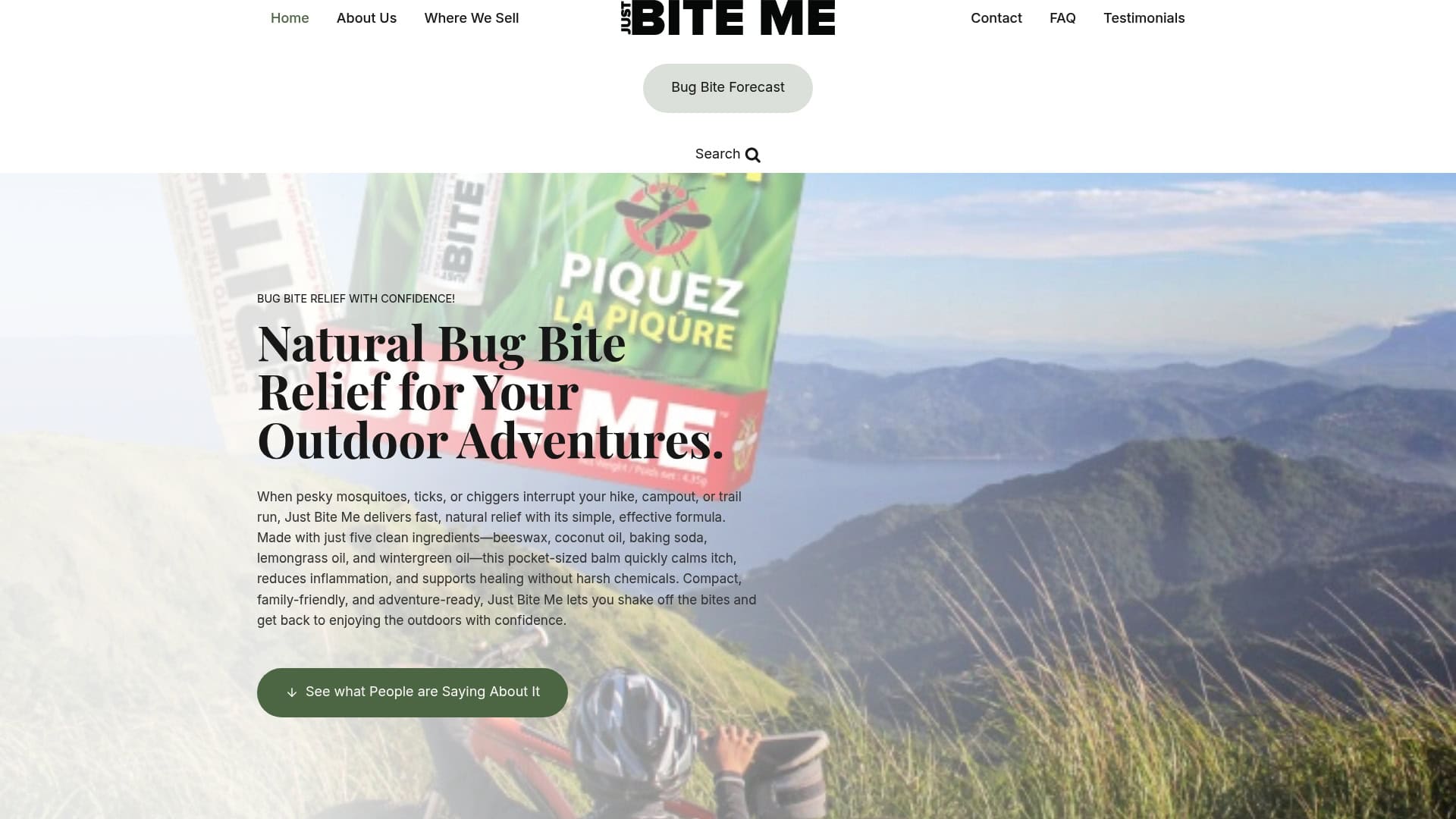
- Five organic ingredients, clearly listed
- Stick format fits any pocket or first-aid kit
- Designed for mosquito bites, bee stings, chiggers, and poison ivy irritation
- Patch-test before first use; escalate to a clinician for severe reactions
Visit justbiteme.com to see the full ingredient list, sizing options, and where to buy. For families heading into bug season, it is the kind of simple, honest product worth having before you need it.
Useful sources
- Are Natural Skin Care Products Worth the Hype? — Cleveland Clinic
- Naturopathy — Cleveland Clinic
- Herbal Creams versus Synthetic Creams: A Comparative Review of Efficacy and Safety — IRE Journals
- What Are ‘Natural’ Skin-Care Products, and Are They Better for You? — Everyday Health
- Natural vs Chemical Skincare: Which One Truly Wins for Your Skin? — Dermology Hub
- A Guide to Herbal Remedies — MedlinePlus
- Herbal Medicine — Johns Hopkins Medicine
For red-flag symptoms — rapid swelling, breathing difficulty, spreading rash, or signs of infection — contact a clinician or call emergency services immediately. This article is general information, not medical advice; confirm any treatment decisions with a qualified healthcare provider for your specific situation.