Why Essential Oils Soothe Bites: Natural Relief in 2026
Essential oils calm bug bites through several overlapping biological pathways, not just one. They stabilize mast cells to reduce histamine release, inhibit the COX and LOX enzymes that drive redness and swelling, and soothe the irritated nerve endings that keep the itch-scratch cycle spinning. The result is faster, broader relief than most single-ingredient treatments can offer. Here is what is actually happening under your skin when you reach for a natural remedy:
- Mast cell stabilization: Key compounds like linalool (lavender) and terpinen-4-ol (tea tree) calm mast cells, cutting the histamine flood that causes that maddening itch.
- Enzyme inhibition: COX and LOX enzyme suppression reduces prostaglandins and leukotrienes, the chemical messengers behind swelling and heat at the bite site.
- Analgesic effects: Menthol and linalool act on pain receptors directly, dulling the sting before it registers as sharp discomfort.
- Antimicrobial protection: Tea tree and lemongrass oils create an inhospitable environment for bacteria, lowering the risk of a secondary infection when skin is broken.
- Nerve soothing: The itch-scratch feedback loop damages skin and prolongs inflammation. Cooling compounds like menthol interrupt that cycle by giving nerves a competing sensation to focus on.
Table of Contents
- The best essential oils for bug bite relief
- How to safely apply essential oils for bug bite relief
- Safety considerations and when to see a doctor
- How Justbiteme’s balm puts these oils to work
- Essential oils vs. conventional treatments for bug bites
- Justbiteme: natural bite relief you can actually take outside
- Key Takeaways
The best essential oils for bug bite relief
Not every oil works the same way, and knowing the difference helps you pick the right one for the moment. Lavender is the most versatile starting point; tea tree is the go-to when infection risk is real. Here is how each one earns its place in your kit.
- Lavender oil: Contains linalool and linalyl acetate that reduce inflammation and ease pain. It is one of the few oils considered safe to apply directly on intact skin, making it the fastest option when you are mid-trail and do not have a carrier oil handy.
- Tea tree oil: Terpinen-4-ol, its active compound, reduces inflammatory markers by up to 40% when applied topically. Its antiseptic and antibacterial properties also make it the right call for bites that look red and angry.
- Peppermint oil: Menthol activates TRPM8 cold receptors in the skin, creating a cooling sensation that distracts nerves from itch and pain signals. Think of it as a natural counterirritant. Peppermint also carries anti-inflammatory and antimicrobial effects that add to the relief.
- Chamomile oil: Bisabolol, chamomile’s key compound, calms redness and reduces swelling with a gentleness that makes it ideal for sensitive skin and children. It works more slowly than peppermint but tends to last longer.
- Camphor oil: Delivers a mild anesthetic effect that quiets itching fast. It is worth keeping in the kit for intact skin bites, but skip it entirely if the bite is open or already inflamed.
- Lemongrass oil: Both antimicrobial and anti-inflammatory, lemongrass is a solid choice when you want to address the sting and the infection risk at the same time.
- Basil oil: A natural antimicrobial with antioxidant properties that supports skin repair as the bite heals. Less dramatic than tea tree but a useful addition to a natural insect bite remedy blend.
How to safely apply essential oils for bug bite relief
Safe application is where most people go wrong. The oils are potent, and a little structure goes a long way toward getting relief without creating a new problem.
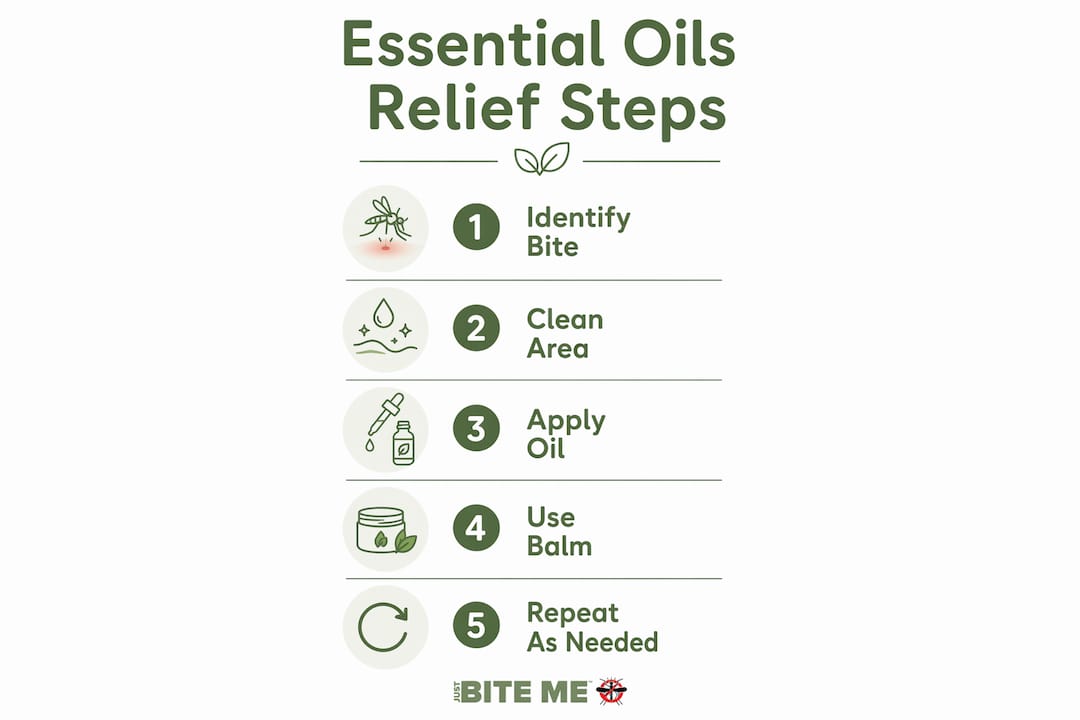
- Dilute before you apply. Most essential oils need a carrier oil like coconut oil, jojoba, or sweet almond oil before they touch skin. A standard dilution for adults is 2% (roughly 12 drops of essential oil per one ounce of carrier). Lavender is the common exception and can often be used neat on intact skin.
- Patch test first. Apply a small diluted amount to the inside of your wrist and wait 24 hours. Redness, itching, or a rash means that oil is not right for your skin.
- Apply up to three times daily. More frequent application does not speed healing and increases the chance of irritation. Consistency over a day or two is more effective than repeated applications in one hour.
- Choose your format wisely. Roll-ons and balms are the most practical for outdoor use. A balm made with beeswax and coconut oil, like the one Justbiteme formulates, keeps the essential oils in contact with the bite longer than a spray or a loose oil.
- Avoid broken or highly inflamed skin. Camphor and peppermint especially can worsen irritation on open wounds. Stick to intact skin and let the bite close before applying stronger oils.
- Extra care for children. Peppermint and camphor are not recommended for children under two years old. For young kids, chamomile and diluted lavender are the gentler, safer options.
Pro Tip: Use a stainless steel rollerball applicator when you can. The metal adds a physical cooling effect on top of the oil’s chemical action, giving you two layers of itch relief at once.
Safety considerations and when to see a doctor
Essential oils are genuinely effective for minor bites, but they are not a substitute for medical care when the situation calls for it. Knowing the line between “this needs more oil” and “this needs a doctor” keeps you safe on the trail and at home.
- Go to urgent care immediately if a bite causes severe swelling, difficulty breathing, dizziness, or a spreading rash. These are signs of anaphylaxis or a serious allergic reaction that no oil can address.
- Watch for infection signs: increasing warmth, pus, red streaks radiating from the bite, or fever. These require antibiotics, not essential oils.
- Undiluted oils on broken skin can cause chemical burns or contact dermatitis, particularly camphor and peppermint. Always dilute, and always check the skin condition before applying.
- Allergic reactions to the oils themselves are possible. Symptoms include hives, burning, or a rash at the application site. Stop use immediately and wash the area with soap and water.
- Children under two: avoid camphor and peppermint entirely. Eucalyptus also falls in this category. Chamomile and lavender at low dilutions are the safest choices for little ones.
- Pregnancy: consult a healthcare provider before using camphor, peppermint, or any oil with strong bioactive compounds during pregnancy.
Experts note that essential oils modulate skin repair and inflammation rather than simply numbing discomfort, which is why they work well for minor bites but are not designed for systemic reactions. For post-bite skin recovery, proper aftercare supports healing once the acute reaction settles.
How Justbiteme’s balm puts these oils to work

Justbiteme built its balm around the same biochemical logic covered above, keeping the formula to five clean ingredients so nothing competes or cancels out. Beeswax and coconut oil serve as the carrier base, holding the essential oils against the skin long enough for terpinen-4-ol, linalool, and menthol to do their work. Coconut oil also brings its own natural bite relief properties, adding a layer of skin conditioning that pure essential oil blends often skip.

The balm is designed for the way outdoor enthusiasts actually use it: compact enough for a pocket, no mess, no measuring. Families hiking with kids can apply it confidently because the formula stays within safe dilution ranges and avoids the camphor and high-menthol concentrations that raise flags for young skin. For anyone who wants to understand exactly what makes a balm formula work, the active phytochemicals behind the relief are worth a closer look.
Pro Tip: Keep the balm in a cooler or shaded pocket on hot days. A slightly chilled balm application adds a mild counterirritant effect on top of the essential oils’ chemical action, the same principle behind the stainless steel rollerball tip above.
Essential oils vs. conventional treatments for bug bites
Conventional options like hydrocortisone cream and oral antihistamines target one pathway each. Hydrocortisone suppresses the immune response broadly; antihistamines block histamine receptors after the fact. Both work, and both have a place, particularly for severe reactions or persistent swelling that does not respond to topical care.
Essential oils take a multi-pathway approach, hitting mast cell stabilization, enzyme inhibition, and nerve soothing at the same time. That breadth is their practical advantage for everyday bites. They also support natural skin repair rather than suppressing the immune response wholesale, which matters for people who want their skin to heal, not just feel temporarily quieter.
The honest trade-off: conventional treatments are faster for acute, severe reactions and are backed by decades of clinical trials. Essential oils, used correctly and with chemical-free bug bite treatment principles in mind, are better suited for the minor, everyday bites that make up the vast majority of outdoor encounters. For most mosquito bites, chigger welts, and bee stings, a well-formulated essential oil balm handles the job without synthetic chemicals or side effects.
Justbiteme: natural bite relief you can actually take outside
When you are three miles into a trail and something bites you, the last thing you want is a complicated routine. Justbiteme’s balm gives you the organic essential oil bite soothers your skin needs in a format that fits in your pocket and works in seconds.

Five clean ingredients. No synthetic chemicals. No guessing about dilution ratios in the field. The beeswax base keeps the essential oils working longer than a spray or loose oil would, and the compact stick format means it goes wherever you go, whether that is a weekend camping trip, a backyard cookout, or a school hike. Justbiteme is built for families and outdoor enthusiasts who want effective, organic relief without carrying a whole apothecary. Grab yours at justbiteme.com and keep it in your pack before the next adventure starts.
Key Takeaways
Essential oils soothe bug bites by targeting multiple biological pathways at once, including mast cell stabilization, enzyme inhibition, and nerve cooling, making them broadly effective for everyday insect bites.
| Point | Details |
|---|---|
| Multi-pathway relief | Essential oils hit histamine release, COX/LOX enzymes, and nerve receptors simultaneously for broader relief than single-ingredient treatments. |
| Tea tree’s potency | Terpinen-4-ol in tea tree oil reduces inflammatory markers by up to 40% when applied topically. |
| Dilution is non-negotiable | Most oils require a 2% dilution in a carrier oil for adults; applying undiluted oils on broken skin risks chemical burns. |
| Children need gentler oils | Chamomile and diluted lavender are the safest choices for young children; avoid camphor and peppermint under age two. |
| Justbiteme’s approach | Justbiteme combines beeswax, coconut oil, and essential oils in a five-ingredient balm designed for safe, portable, organic bite relief outdoors. |