
Chemical-Free Outdoor Skin Care Options for 2026
The best chemical-free outdoor skin care options combine beeswax-based balms, non-nano zinc oxide mineral sunscreen, vitamin C antioxidant serums, and botanical extracts like calendula and lavender to temporarily relieve bug bites and protect skin from environmental stress. You don’t need a complicated routine or a bag full of synthetic products. A handful of well-chosen natural ingredients covers most of what the trail, campsite, or backyard throws at your skin.
Here’s what belongs in your pack:
- Beeswax balms create a physical barrier that locks out irritants and soothes inflamed skin around bites
- Coconut oil moisturizes and offers mild antimicrobial support for irritated areas
- Non-nano zinc oxide sunscreen physically reflects UVA and UVB rays without absorbing into the bloodstream
- Vitamin C antioxidant serum neutralizes free radicals generated by sun exposure and helps skin repair
- Calendula and lavender extracts calm redness and reduce the urge to scratch
Apply mineral sunscreen generously before heading out — roughly a quarter teaspoon for your face alone — and reapply every 1–2 hours when you’re active outdoors.
Table of Contents
- How to build an organic outdoor skin care routine for summer
- Natural ingredients that actually soothe bug bites and irritation
- Full-body protection tips every outdoor enthusiast should know
- DIY recipes for chemical-free bug bite relief
- Justbiteme: clean-ingredient bite relief built for the trail
- Key Takeaways
How to build an organic outdoor skin care routine for summer
A solid organic outdoor skin care routine for active days needs just four steps, applied consistently morning and evening.
- Step 1: Low-pH cleanser (pH 4.5–5.5). A sulfate-free, plant-based cleanser removes sweat and sunscreen without stripping your skin’s natural oils. Harsh cleansers push your skin to overproduce sebum, which is the last thing you want on a hot trail.
- Step 2: Vitamin C antioxidant serum. Apply a few drops of a stable L-ascorbic acid formula to slightly damp skin and let it absorb. Think of it as your free-radical defense layer working alongside your SPF.
- Step 3: Lightweight organic moisturizer. Choose a gel-cream or water-based formula with hyaluronic acid and aloe vera. Apply while skin is still slightly damp to lock in hydration without clogging pores during activity.
- Step 4: Broad-spectrum mineral SPF. Finish with a non-nano zinc oxide sunscreen as your final morning step. Don’t skip your neck, ears, and the backs of your hands.
Pro Tip: Dr. Cindy Jones, a Ph.D. biochemist and herbalist at Colorado Aromatics, highlights that antioxidant-rich herbs combined with green chemistry principles are key to effective outdoor skin repair, especially at altitude where UV intensity increases.
Certified organic routines work well with as few as three to five targeted products. More steps don’t mean better protection.
Natural ingredients that actually soothe bug bites and irritation
Knowing which botanicals do real work helps you cut through the noise when shopping for outdoor skincare without chemicals.
- Beeswax forms a breathable, water-resistant physical barrier on skin. It softens and protects without clogging pores, making it ideal for sealing in relief after a mosquito bite or bee sting. Learn more about how beeswax protects skin naturally.
- Coconut oil delivers deep moisture and mild antimicrobial properties. Its lauric acid content helps maintain skin cleanliness around irritated areas, which matters when you’re miles from a sink.
- Calendula extract is one of the most reliably soothing botanicals for inflamed or reactive skin. It’s a go-to for sensitive skin types and children.
- Lavender essential oil reduces the sensation of itching and supports calm, comfortable skin after bites. A single drop on a bite site goes a long way.
- Neem carries natural anti-inflammatory compounds and has a long history of use in outdoor skin care across warm, humid climates.
- Red raspberry seed oil and carrot seed oil are antioxidant-rich additions that support skin resilience against environmental stressors. They work as boosters alongside mineral sunscreen, not as replacements for it.
- Botanical balms combining beeswax and coconut oil create a soothing, protective physical barrier that provides temporary relief from minor bites and irritation without harsh chemicals.
For a deeper look at which soothing ingredients for insect bites are most effective, the chemistry behind each one matters more than the label claims.
Full-body protection tips every outdoor enthusiast should know
Most people focus on their face and forget the spots that take the most punishment outdoors.
- Lips, ears, and the back of the neck have minimal oil glands and melanin, making them uniquely vulnerable to sun, wind, and insect activity. Natural lip balms with cocoa butter and shea butter offer staying power through swimming and sweating.
- Reapply every 1–2 hours. Sweat and friction break down even the best natural balms and sunscreens during active outdoor use. Set a timer if you tend to lose track.
- Waterless cleansing mid-hike is easier than most people realize. A dry wash using oat powder and clay removes sweat and debris without water, preventing pore clogging and irritation when you’re far from a stream.
- Non-comedogenic layers matter in heat and humidity. Lightweight products prevent heat rash while keeping your skin’s natural defenses intact.
- Seasonal and regional adjustments are worth making. In the humid Southeast during July and August, black flies and no-see-ums are relentless, so a balm with a physical barrier ingredient is more practical than a spray. In the dry, high-altitude West, prioritize deeper moisture and stronger antioxidant support to counter increased UV intensity.
Pairing a natural body brush into your pre-trip routine stimulates circulation and removes dead skin, helping your balms and moisturizers absorb more effectively.
DIY recipes for chemical-free bug bite relief
These simple recipes use ingredients you can find at most natural grocery stores or online.
Beeswax and lavender bite balm. Melt two tablespoons of beeswax with two tablespoons of coconut oil in a double boiler. Remove from heat, add 10 drops of lavender essential oil, and pour into a small tin. Apply directly to bites for temporary itch relief. This is the same basic formula behind many field-tested natural balms used by hikers and campers.
Oat and clay trail cleanser. Mix equal parts colloidal oatmeal and white kaolin clay in a small jar. Add a few drops of water at the trailhead and apply gently in circles to cleanse skin without rinsing. It pulls sweat and grime away while the oat soothes any reactive skin.
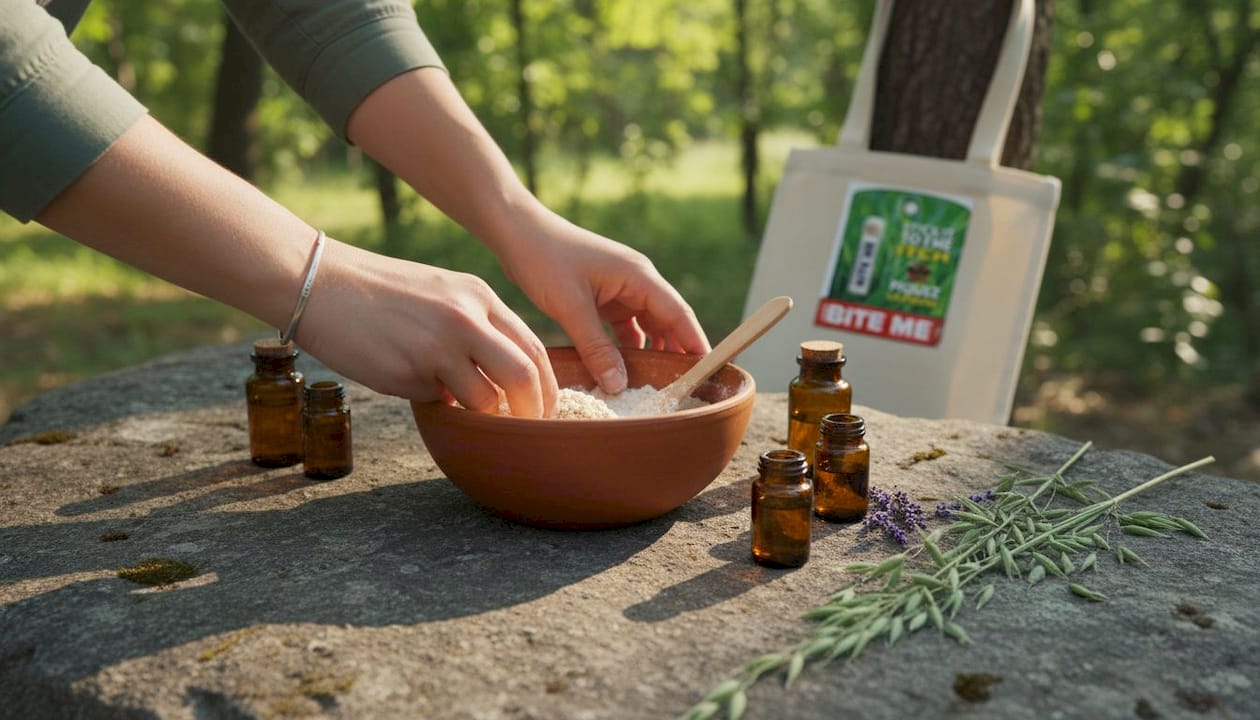
DIY calming spray. Combine witch hazel, water, and a few drops each of lavender and tea tree oil in a small spray bottle. Spritz on irritated skin or bite sites for quick, cooling relief. Reapply often, especially after sweating.
Pro Tip: Always patch test any DIY recipe on your inner arm before applying it to a bite or sensitive area. Essential oils are potent, and a small test prevents a bigger reaction on already-irritated skin.
Justbiteme: clean-ingredient bite relief built for the trail
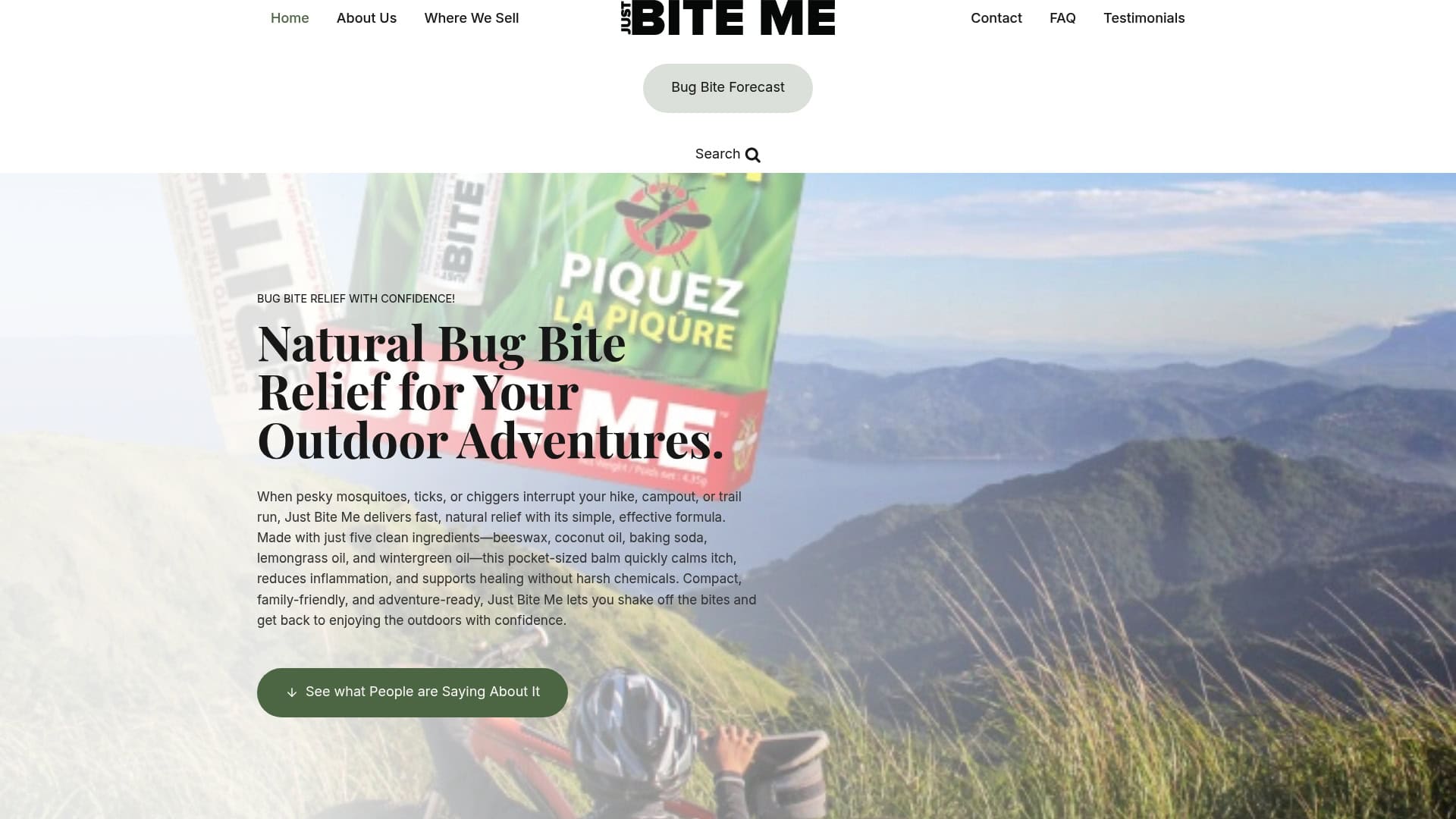
When you want the simplicity of a DIY balm without the prep work, Justbiteme delivers exactly that. The balm is built on just five clean ingredients, including beeswax and coconut oil, specifically formulated to temporarily relieve itching and irritation from mosquito bites, bee stings, chiggers, and poison ivy. No synthetic chemicals, no parabens, no guessing about what’s on your skin.
What makes Justbiteme practical for outdoor use is its compact, portable format. It fits in a hip belt pocket or a kid’s backpack, and it’s ready to use the moment those determined little biters find you. The formula is safe for the whole family, including sensitive skin, so one balm covers everyone on the trail.
Ready to skip the itch and get back to the adventure? Grab natural bug bite relief from Justbiteme and keep it in your pack all season long. You can also explore the camping-specific relief options if you spend serious time in the backcountry.
Key Takeaways
Natural, chemical-free outdoor skin care works best when beeswax balms, non-nano zinc oxide sunscreen, and botanical extracts are layered together and reapplied every 1–2 hours during active outdoor use.
| Point | Details |
|---|---|
| Mineral sunscreen is non-negotiable | Non-nano zinc oxide physically blocks UVA and UVB rays without absorbing into the bloodstream. |
| Reapply every 1–2 hours | Sweat and friction reduce balm and sunscreen efficacy during active outdoor conditions. |
| Beeswax and coconut oil soothe bites | These two ingredients form a protective barrier and temporarily relieve itching from mosquito bites and stings. |
| Protect overlooked areas | Lips, ears, and the back of the neck have minimal melanin and need dedicated natural protection. |
| Justbiteme for on-trail relief | Five clean ingredients in a compact balm provide temporary itch relief from bites and irritation, safe for the whole family. |